天皇
How to Understand
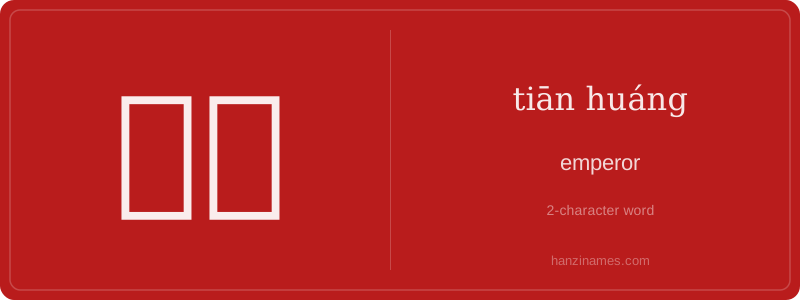
天皇 (tiān huáng) is the Chinese term for 'emperor,' typically referring to the supreme ruler of a country, especially in historical or traditional contexts. It is often used to describe the emperor of Japan, though it can also refer to emperors in general.
The character 天 (tiān) means 'heaven' or 'sky,' and 皇 (huáng) means 'imperial' or 'emperor.' Together, they convey the idea of a ruler who is divinely sanctioned, as if chosen by heaven itself.
天皇 is commonly used in historical texts, literature, and discussions about Japanese history. It is less frequently used in modern Chinese to refer to current rulers, but it remains an important term in cultural and historical discourse. In everyday speech, people may use other terms like 国王 (guówáng, king) or 首脑 (shǒunǎo, leader) depending on the context.