太守
How to Understand
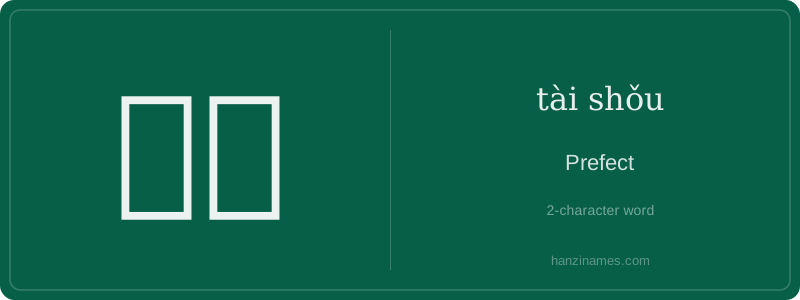
太守 (tài shǒu) is a historical title used in ancient China to refer to the chief administrator of a prefecture or region. It was commonly used during the Han, Tang, and Song dynasties, and denoted a high-ranking official responsible for governance, law, and public order.
The character 太 (tài) means 'great' or 'high,' and 守 (shǒu) means 'to guard' or 'to supervise.' Together, they imply a person in charge of safeguarding and managing a region, making it a title of significant authority and responsibility.
Today, 太守 is mostly encountered in historical contexts or literature. Understanding this term helps learners grasp the structure of ancient Chinese government and appreciate classical texts. It is also sometimes used metaphorically to describe someone in a position of leadership or oversight.