自卫
How to Say
👀 0
How to Write
Meaning: Self-defense
How to Understand
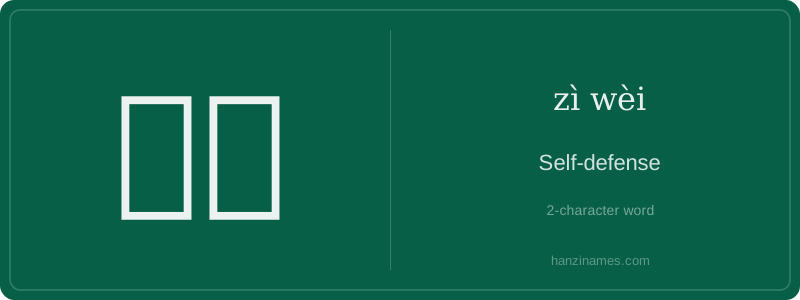
自卫
自卫 (zì wèi) means 'self-defense' or 'defending oneself.' It refers to the act of protecting oneself from harm, whether physical, emotional, or legal. Unlike passive defense, 自卫 implies an active response to a threat.
The character 自 (zì) means 'self,' and 卫 (wèi) means 'to guard' or 'to protect.' Together, they form a compound that literally translates to 'guarding oneself,' emphasizing personal responsibility in protection.
自卫 is commonly used in legal contexts, such as justifying self-defense in criminal cases. It also appears in martial arts, military training, and everyday discussions about safety. In Chinese culture, the concept of 自卫 is closely tied to personal dignity and the right to protect one's own life and property.
Example Sentences
他为了保护家人而进行了自卫。
He performed self-defense to protect his family.
警察在执行任务时必须保持自卫意识。
Police must maintain a sense of self-defense while on duty.