合计
How to Understand
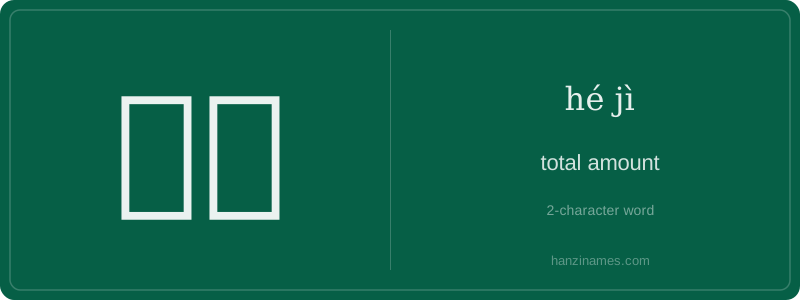
合计 means 'total amount' or 'sum total,' often used to refer to the combined value of multiple items or figures. It is commonly used in financial, statistical, or accounting contexts, and differs from similar terms like 总计 (zǒng jì), which can also mean 'total' but may imply a more general summary.
The character 合 (hé) originally meant 'to join' or 'to combine,' while 计 (jì) means 'to calculate' or 'to plan.' Together, they form a term that literally means 'to combine calculations,' reflecting the idea of adding up various elements into one overall figure.
合计 is frequently used in business reports, receipts, and invoices to indicate the final total. In daily conversation, it might appear in situations like calculating a bill or summing up expenses. It is also used in mathematical contexts and can be found in both formal and informal settings.