辣
Character Story & Explanation
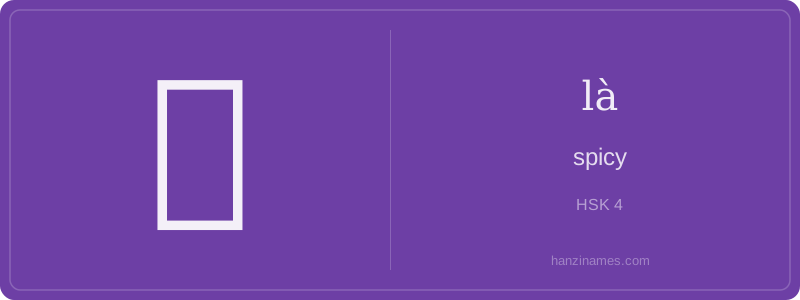
辣 entered written Chinese during the Ming Dynasty (1368–1644), after chili peppers were introduced from the Americas via maritime trade. Before that, ‘spiciness’ came from ginger, Sichuan pepper (not botanically hot), and mustard—described with characters like 辛 or 芥. Today, 辣 is ubiquitous: in food labels (‘微辣’ wēi là = ‘mildly spicy’), internet slang (‘太辣了!’ — ‘It’s so spicy!’ meaning ‘shocking/unexpected’), and idioms like ‘心狠手辣’ (xīn hěn shǒu là), meaning ‘ruthless’, literally ‘cruel-hearted and ruthless-handed’—a documented phrase since at least the Qing-era novel *The Scholars*.
The character 辣 is a phono-semantic compound: left side 辛 (xīn, radical meaning ‘pungent, bitter, labor’) + right side 刺 (cì, ‘thorn, prickle’), which provides phonetic hint (cì → là, sharing historical consonant root). It first appears in standardized dictionaries like the *Kangxi Dictionary* (1716) under the 辛 radical, confirming its semantic grounding in sensory intensity and moral rigor.
辣 (là) is far more than a descriptor of capsaicin-induced heat—it embodies a cultural philosophy of intensity, authenticity, and transformative energy. In Chinese thought, 'heat' isn’t merely sensory; it’s a vital force (qi) that stirs the body, sharpens perception, and signals vitality. Dishes labeled 辣 are not just spicy—they’re *alive*, demanding presence and rewarding courage with layered flavor.
This character reflects the Chinese worldview where opposites coexist dynamically: 辣 balances 甜 (sweet), cools with 冰 (ice), and harmonizes with 酸 (sour) in regional cuisines like Sichuan’s mala (numbing-spicy). Its radical 辛 (xīn)—meaning ‘pungent’ or ‘bitter labor’—links spice to moral endurance, echoing Confucian ideals: enduring hardship (辛劳) refines character, much as chili transforms blandness into brilliance.
Unlike Western associations of heat with danger or excess, 辣 carries auspicious connotations—red chilies hang during Lunar New Year for prosperity and warding off evil. To call someone ‘a 辣 girl’ (辣妹, là mèi) is praise for boldness and charisma. Thus, 辣 reveals a worldview where sensation, ethics, and aesthetics fuse: heat is not an obstacle—but a catalyst for growth, joy, and communal warmth.
Example Sentences
Common Compounds
Similar Characters — Don't Mix These Up
Your First Step into Chinese Culture: Get a Chinese Name
Every journey into Chinese begins with a name. Use our free Chinese name generator to create a meaningful, personalized Chinese name that fits you perfectly.
Get My Chinese Name →