伴
Character Story & Explanation
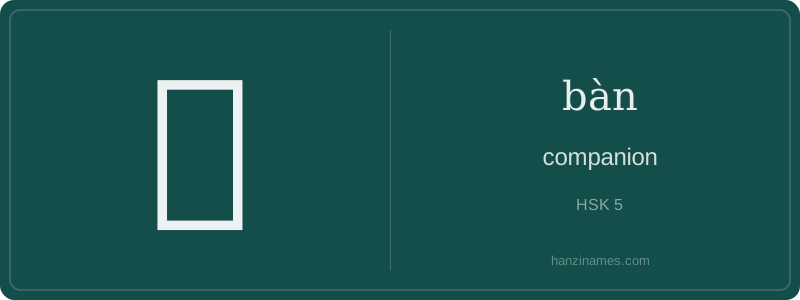
In contemporary China, 伴 is ubiquitous in daily life: students form 学习伙伴 (study partners) for Gaokao prep; hospitals designate 陪护伴 (care companions) for post-op patients; and dating apps use 交友伴 (friendship companion) to signal low-pressure connection. The phrase 作伴 (zuò bàn, 'to keep company') appears in classical poetry like Bai Juyi’s Tang-era lines: '独坐幽篁里,弹琴复长啸。深林人不知,明月来相照。' — where moonlight becomes a silent 伴. Modern idioms include 形影不离的伴侣 (inseparable companion), reflecting its enduring relational weight.
The character’s form is well-documented: 伴 first appeared in seal script (c. 3rd century BCE) as a phono-semantic compound — 亻 (person radical) + 半 (bàn, phonetic component, also suggesting 'half' → shared existence). It is not pictographic but logographic, with no oracle-bone origins; its earliest verified use is in Warring States bamboo texts referring to attendants accompanying nobles.
The character 伴 (bàn) embodies the warmth of human connection in Chinese culture — not just a neutral 'partner', but someone who shares life’s rhythm: walking side-by-side, studying together, or standing by you in hardship. Its radical 亻 (person) signals human agency, while the right component 半 (bàn, 'half') subtly suggests reciprocity — as if two halves completing one whole. This semantic duality reflects Confucian ideals of mutual responsibility in relationships.
In modern usage, 伴 carries gentle intimacy and reliability. It avoids the formality of 同事 (colleague) or the romance of 恋人 (lover), occupying a tender middle ground — like a study partner who brings tea during exam season, or an elderly neighbor who walks your child to school daily. Such quiet companionship is culturally revered as 'unspoken trust' (默契).
Unlike English 'companion', which can sound literary or archaic, 伴 feels vividly present in everyday Mandarin: from classroom chatter ('谁是你学习的伴?') to hospital signage ('陪护伴'). It appears in legal contexts too — 陪伴权 (right to companionship) was affirmed in China’s 2021 Civil Code, recognizing emotional care as fundamental to elder welfare. This legal anchoring reveals how deeply 伴 is woven into social ethics.
Example Sentences
Common Compounds
Similar Characters — Don't Mix These Up
Your First Step into Chinese Culture: Get a Chinese Name
Every journey into Chinese begins with a name. Use our free Chinese name generator to create a meaningful, personalized Chinese name that fits you perfectly.
Get My Chinese Name →