哲
Character Story & Explanation
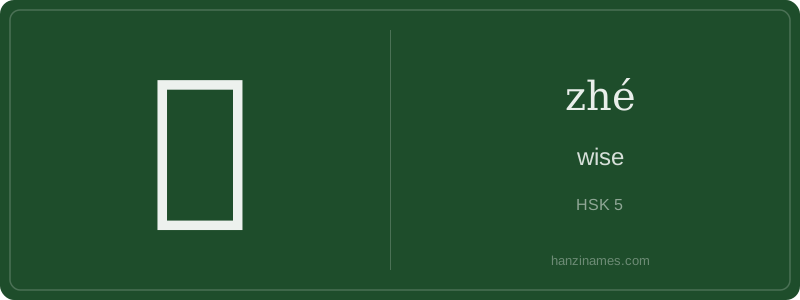
哲 is widely used in modern Chinese in academic, literary, and official contexts — most notably in 哲学 (zhéxué, 'philosophy'), a standard university discipline since the early 20th century. It appears in idioms like 哲人其萎 (zhérén qí wěi, 'a wise person declines' — from the Classic of Rites, describing the passing of a sage) and in formal titles like 哲学家 (philosopher). The character was standardized in the Qin dynasty small seal script and later clerical script; its earliest attested form (in Han dynasty bamboo slips) already shows the 口 + 折 structure.
The right component 折 (zhé, 'to break, bend') originally conveyed the idea of 'penetrating insight' — bending one’s mind to discern truth beneath surface appearances. This semantic association with deep analysis, not literal breaking, is well-documented in classical commentaries like the Shuōwén Jiězì (121 CE), which defines 哲 as 'wise, discerning' (知也 — 'knowledge/understanding').
Hello students! The character 哲 (zhé) means 'wise' or 'philosophical' — it’s not just about being smart, but about deep, reflective wisdom. It appears in formal and academic contexts, especially related to philosophy, ethics, and insightful judgment. Though it has the 口 (mouth) radical, it doesn’t relate to speech directly — instead, this radical often appears in characters associated with expression of ideas, like naming or declaring truth. At HSK Level 5, you’ll encounter it in reading passages about Chinese thought or modern intellectual life.
Don’t confuse 哲 with everyday words for 'smart' like 聪明 (cōngmíng). 哲 carries weight — it’s used for timeless insight, like Confucius’ teachings or a profound life observation. Its 10 strokes follow a clear order: start with the left 口, then build the right side step by step. Practice writing it slowly while saying 'zhé' aloud — linking sound, shape, and meaning helps memory.
This character is a gateway to Chinese intellectual culture. You’ll see it in university department names (e.g., 哲学系 — Philosophy Department), book titles, and even personal names (e.g., 哲明 — 'wise and bright'). It reflects a core value in Chinese tradition: wisdom as cultivated understanding, not just quick thinking. As you advance, recognizing 哲 will help you decode compound words and grasp nuanced discussions about values, logic, and human nature.
Example Sentences
Common Compounds
Similar Characters — Don't Mix These Up
Your First Step into Chinese Culture: Get a Chinese Name
Every journey into Chinese begins with a name. Use our free Chinese name generator to create a meaningful, personalized Chinese name that fits you perfectly.
Get My Chinese Name →