喊
Character Story & Explanation
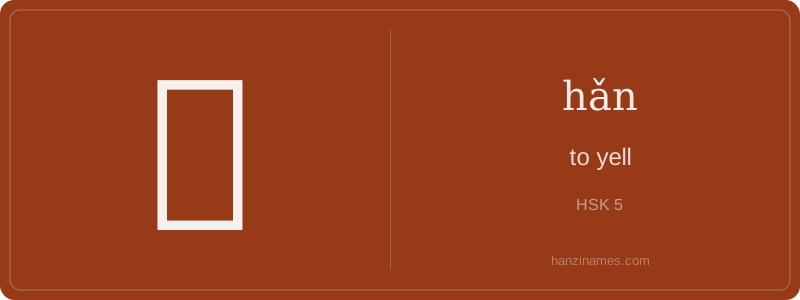
In modern Chinese daily life, 喊 is commonly used in both literal and figurative ways: parents 喊 children home at dusk, protesters 喊 slogans during demonstrations, and performers 喊调 (shout melodies) in northern folk opera genres like bangzi. It appears in fixed expressions such as ‘喊口号’ (shout slogans) and ‘喊冤’ (cry out injustice), the latter documented in Ming-Qing legal vernacular fiction and still used in media reporting on wrongful convictions.
The character 喊 is a phono-semantic compound: 口 (kǒu, ‘mouth’) signals meaning (speech/vocalization), while 函 (hán, originally ‘box’ or ‘envelope’, here serving phonetically) provides sound. Its earliest attestation is in Song dynasty texts; it was not an oracle-bone or bronze script character, but evolved later to fill a lexical gap for loud, intentional vocalization distinct from 說 (say), 叫 (call/yell), or 啼 (cry).
‘喊’ (hǎn) is a dynamic verb meaning 'to yell', 'to shout', or 'to call out loudly'—emphasizing volume, urgency, or emotional intensity. Unlike neutral verbs like ‘say’ or ‘speak’, 喊 inherently conveys projection and vocal force, often in contexts of warning, excitement, protest, or summoning. It appears frequently in spoken Mandarin and informal writing, carrying a visceral, embodied quality rooted in the mouth radical 口.
In Western cultural framing, ‘shouting’ often carries negative connotations—loss of control, aggression, or rudeness—whereas 喊 can be socially sanctioned or even heroic: think of soldiers shouting battle cries, teachers calling students across a courtyard, or fans cheering at a sports event. The act isn’t automatically impolite; context, relationship, and intent determine its appropriateness—much like English ‘yell’ versus ‘call out’.
This nuance reflects broader Chinese pragmatic norms: vocal expressiveness is situationally calibrated rather than universally stigmatized. A parent shouting ‘小心!’ (‘Be careful!’) to a child darting into traffic is protective, not authoritarian. Similarly, in traditional opera or folk performances, stylized 喊 is an artistic device—precisely timed, pitch-controlled, and culturally resonant—unlike Western theatrical ‘shouting’, which may signal breakdown or climax.
Example Sentences
Common Compounds
Similar Characters — Don't Mix These Up
Your First Step into Chinese Culture: Get a Chinese Name
Every journey into Chinese begins with a name. Use our free Chinese name generator to create a meaningful, personalized Chinese name that fits you perfectly.
Get My Chinese Name →