塘
Character Story & Explanation
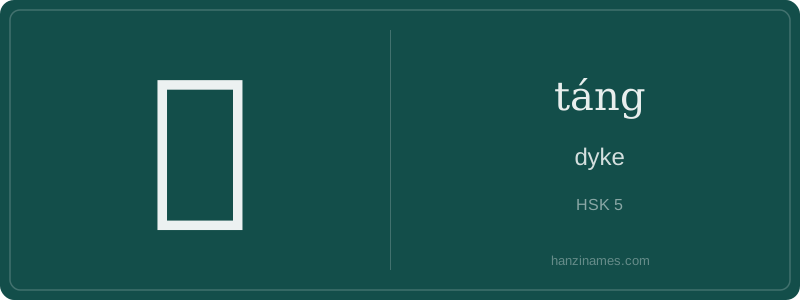
塘 has been used for over two millennia in Chinese hydrological texts and local gazetteers to denote engineered water-containment structures. In the *Book of Han* (1st century CE), 塘 appears in records of irrigation projects in the Guanzhong Plain. Today, it remains common in geographic names — e.g., Hangzhou’s West Lake area includes Xixi Wetland’s ‘Zhenxi Tang’ (Zhenxi Dyke) — and in idioms like ‘塘塞’ (táng sāi), meaning ‘to stall or deflect (a question)’, metaphorically evoking blocking water with a dyke.
The character’s form is phono-semantic: 土 (radical, meaning ‘earth’) + 唐 (táng, phonetic component, also meaning ‘grand’ or ‘vast’ in classical usage). While not a pictograph, its structure reflects practical etymology: an earthen structure (土) associated with the sound and scale of 唐 — underscoring that early dykes were large, community-built works.
Hello, learners! Today we’ll explore 塘 (táng), a Level 5 HSK character with 13 strokes and the 土 (earth/soil) radical. At its core, 塘 refers to a man-made embankment or dyke — a raised earthen barrier built alongside rivers, canals, or rice fields to control water flow and prevent flooding. It’s not just a wall of dirt; it’s an ancient engineering solution deeply tied to China’s agrarian history and water management traditions.
Though ‘dyke’ is the most precise technical meaning, in modern usage 塘 often appears in place names and compound words referring to small, enclosed bodies of water — like ponds or reservoirs — especially those bordered or formed by earthen banks. This reflects how the function (containing water) and structure (earthen bank) became conceptually linked over time.
Don’t confuse 塘 with natural landforms like hills or cliffs. Its 土 radical clearly signals human intervention: soil shaped by labor. When you see 塘, think of farmers building up earth with shovels, centuries ago and still today in rural China. It’s a quiet but powerful reminder of how language preserves collective memory of land stewardship and hydraulic wisdom.
Example Sentences
Common Compounds
Similar Characters — Don't Mix These Up
Your First Step into Chinese Culture: Get a Chinese Name
Every journey into Chinese begins with a name. Use our free Chinese name generator to create a meaningful, personalized Chinese name that fits you perfectly.
Get My Chinese Name →