忍
Character Story & Explanation
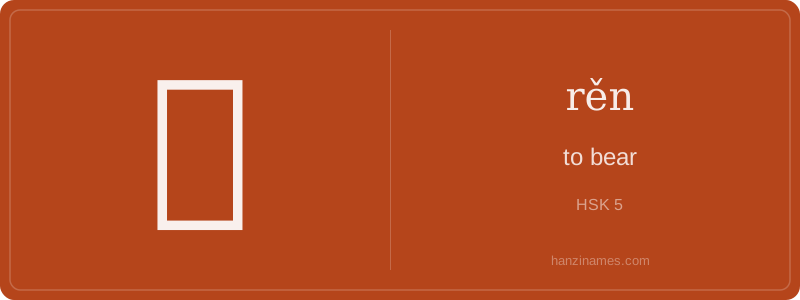
忍 is deeply embedded in Chinese ethical and strategic thought. It appears in foundational texts like the *Analects* and Sun Tzu’s *Art of War* (‘昔之善战者,先为不可胜,以待敌之可胜’—implying patient readiness). Common idioms include 小不忍则乱大谋 (‘A small impatience ruins great plans’) and 忍辱负重 (‘endure humiliation to shoulder heavy responsibility’), both cited in historical records and modern political discourse. The character also features in martial arts philosophy and traditional medicine texts emphasizing emotional regulation for health.
The character’s form is not pictographic but phono-semantic: 刃 (rèn, ‘blade’) serves as the phonetic component (though pronunciation shifted to rěn), while 心 (heart) is the semantic indicator. This structure was standardized in the Qin dynasty’s Small Seal Script and has remained stable for over 2,200 years—confirmed by excavated bamboo slips and Han dynasty steles.
As a linguistic detective, I begin with the modern form of 忍: seven strokes, heart radical (心) at the bottom, and 刃 (rèn, 'blade') above it. This structure isn’t arbitrary—it reflects an ancient conceptual metaphor: enduring pain as if a blade presses upon the heart. The heart radical signals emotional or internal experience, while 刃—though now read rěn here—originally carried connotations of sharpness, danger, and immediacy. Together, they encode the idea of *withstanding* acute inner pressure.
Historically, 忍 appears in early Warring States bamboo texts (4th c. BCE) and is firmly attested in the *Analects* (e.g., 15.3: ‘小不忍則亂大謀’—‘A small lack of forbearance ruins great plans’). Unlike characters invented later for abstraction, 忍 emerged organically from lived moral discourse—Confucian, Daoist, and military strategists alike prized restraint as wisdom, not weakness. Its semantic field expanded from physical endurance to emotional self-control, strategic delay, and ethical patience.
Modern usage preserves this layered gravity. In Mandarin, 忍 is rarely used alone; it thrives in compounds where agency and tension coexist—忍耐 (endurance), 忍受 (to bear/withstand), 忍让 (to yield graciously). Even in slang (e.g., ‘我忍不了了!’), it conveys visceral, embodied limits—not passive suffering, but active containment. This duality—strength disguised as stillness—is why 忍 remains central to HSK 5: learners must grasp not just its definition, but its cultural weight as disciplined resilience.
Example Sentences
Common Compounds
Similar Characters — Don't Mix These Up
Your First Step into Chinese Culture: Get a Chinese Name
Every journey into Chinese begins with a name. Use our free Chinese name generator to create a meaningful, personalized Chinese name that fits you perfectly.
Get My Chinese Name →