悄
Character Story & Explanation
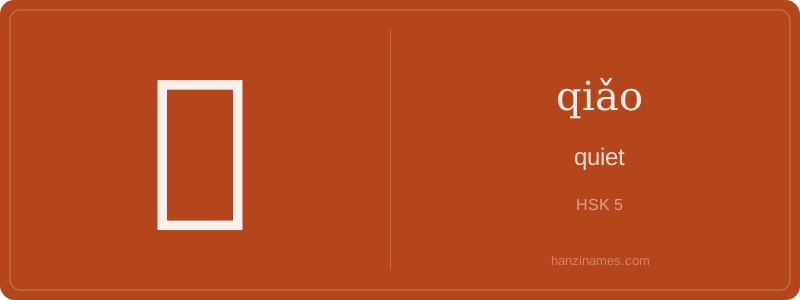
悄 is widely used in modern Chinese literature and media to evoke subtlety and restraint. A classic phrase is 悄无声息 (qiǎo wú shēng xī), meaning 'utterly silent' — found in news reports describing covert operations, literary descriptions of snowfall, and even corporate announcements about quiet restructuring. The idiom 悄然离去 (qiǎo rán lí qù, 'to depart quietly') appears in historical biographies and contemporary journalism alike, notably in obituaries and diplomatic dispatches.
The character’s form dates to seal script (c. 221–206 BCE), where 忄+少 already conveyed ‘inner stillness’. While no oracle bone form survives, the Shuōwén Jiězì (121 CE) defines it as ‘silent, without sound’ (靜也,無聲也), confirming its early semantic link to quietude — not secrecy or fear, which are sometimes misattributed by learners.
Hi there! Let’s explore 悄 (qiǎo), a character meaning 'quiet' or 'silently'. It belongs to the 忄 (heart/mind) radical — showing it’s related to inner states, not just physical silence. Though it looks simple, its meaning is subtle: it describes actions done quietly, stealthily, or without drawing attention — like tiptoeing or whispering. It’s often used in literary or formal contexts, not casual speech.
Notice its structure: left side 忄 (three strokes: dot, dot, vertical) and right side 少 (shǎo, meaning 'few' or 'little'). This isn’t coincidence — 少 hints at 'reduced presence' or 'minimal sound', reinforcing quietness. Unlike the more common 安静 (ānjìng) for general quiet, 悄 carries a gentle, almost poetic nuance — think of moonlight falling silently or someone slipping away unnoticed.
Remember: 悄 is pronounced qiǎo — with the third tone (falling-rising). Don’t confuse it with qiāo (a rare variant tone in some dialects) or the homophone 悄 (qiāo) in older texts — modern Standard Mandarin uses only qiǎo. It appears in HSK Level 5, so you’ll see it in intermediate-to-advanced reading — especially in essays, poetry, and descriptive prose where atmosphere matters.
Example Sentences
Common Compounds
Similar Characters — Don't Mix These Up
Your First Step into Chinese Culture: Get a Chinese Name
Every journey into Chinese begins with a name. Use our free Chinese name generator to create a meaningful, personalized Chinese name that fits you perfectly.
Get My Chinese Name →