披
Character Story & Explanation
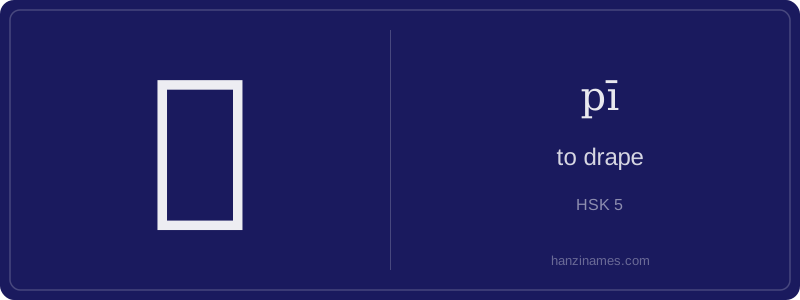
In daily life, 披 appears frequently in weather-related speech (e.g., 披件外套, 'drape on a jacket') and formal media contexts—especially in the compound 披露 (pīlù, 'to disclose'), used widely in news headlines and official statements since at least the 1950s. The phrase 披星戴月 (pī xīng dài yuè, 'to drape stars and wear moon') is a well-documented idiom from Tang dynasty poetry, describing tireless travel by night. It remains in active use today, especially in literature and political speeches.
The character’s structure is not pictographic but phono-semantic: left side 扌 (hand radical) indicates action involving hands; right side 皮 (pí, 'skin/leather') serves as both phonetic clue (historically close to pī) and semantic hint—suggesting something thin, flexible, and covering, like animal hide draped over the body. This construction has been stable since seal script (c. 3rd century BCE).
Imagine a crisp autumn morning in Beijing’s Temple of Heaven park. An elderly tai chi master in a navy-blue silk jacket slowly lifts his arms—then, with deliberate grace, he swings a long, flowing red scarf over his shoulders. He doesn’t ‘wear’ it like a coat; he *drapes* it—lightly, symmetrically, almost ceremonially. That precise, intentional motion is exactly what 披 (pī) captures: not just putting on clothing, but the elegant, often symbolic act of laying fabric across the upper body.
Unlike verbs like 穿 (chuān, ‘to put on clothes’), which implies full dressing, 披 emphasizes surface contact and visual presence—think of a general’s cape billowing in wind, or a monk’s saffron robe resting across bare shoulders. It’s tactile and aesthetic, suggesting openness, readiness, or even vulnerability. The character itself hints at this: its 扌 (hand) radical signals manual action, while the right side ‘皮’ (pí, ‘skin’ or ‘leather’) subtly evokes something supple and covering—like hide stretched over form.
In modern usage, 披 carries both literal and figurative weight. You might 披上大衣 (pī shàng dàyī, ‘drape on an overcoat’) before stepping into winter rain—or 披露真相 (pīlù zhēnxiàng, ‘unveil the truth’), where ‘draping’ transforms into ‘revealing’, as if pulling back a veil. This semantic extension—from physical covering to metaphorical exposure—is deeply rooted in classical Chinese rhetoric, where concealment and revelation were framed through textile imagery.
Example Sentences
Common Compounds
Similar Characters — Don't Mix These Up
Your First Step into Chinese Culture: Get a Chinese Name
Every journey into Chinese begins with a name. Use our free Chinese name generator to create a meaningful, personalized Chinese name that fits you perfectly.
Get My Chinese Name →