摘
Character Story & Explanation
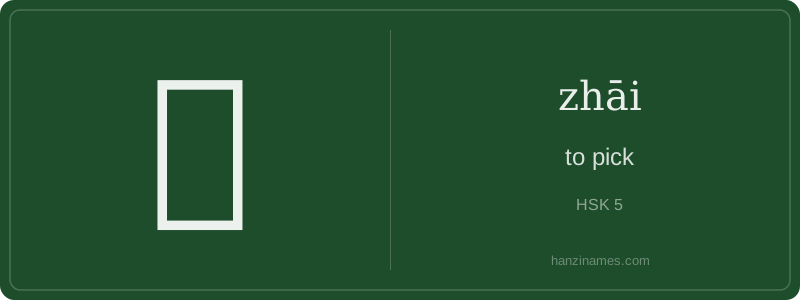
摘 is ubiquitous in modern Chinese: students 摘抄 (zhāichāo) quotes for essays; journalists 摘要 (zhāiyào) news reports; surgeons 摘除 (zhāichú) tumors; and farmers still 摘棉花 (zhāi miánhua) by hand in Xinjiang’s fields—a practice documented in state agricultural reports since the 1950s. The idiom 手到擒来,摘星揽月 (shǒu dào qín lái, zhāi xīng lǎn yuè) metaphorically praises effortless mastery, linking 摘 to celestial ambition.
As a semantic-phonetic compound, 摘 combines 扌 (hand radical, indicating action) and 摘’s phonetic component 吉 (jí, though sound shifted to zhāi over time). Its earliest attestation appears in Han dynasty bamboo slips (c. 2nd century BCE) meaning ‘to pluck fruit’—a concrete agrarian origin confirmed by excavated texts like the Zhangjiashan manuscripts.
The character 摘 (zhāi) embodies a gentle yet intentional act of separation—removing something from its source with care and purpose. Unlike forceful verbs like ‘grab’ or ‘tear,’ 摘 implies selectivity and respect: one chooses *which* fruit to pick, *which* line to excerpt, *which* mask to remove. This reflects a Confucian-inflected worldview where action is guided by discernment (择 zé) and appropriateness (宜 yí), not mere efficiency.
In classical Chinese thought, harvesting—whether of fruit, wisdom, or virtue—is never neutral. To 摘 is to participate in a cyclical relationship between human agency and natural order: the hand reaches, but only when the plum is ripe, the quote resonates, or the burden has outlived its use. Thus, 摘 quietly encodes agrarian ethics and scholarly humility—taking only what is ready, needed, and rightly yours.
Modern usage extends this ethos into digital life: we 摘录 (zhāilù) key passages from articles, 摘要 (zhāiyào) research papers, even 摘掉 (zhāidiào) social media badges—always with implied intentionality. The character thus bridges ancient orchards and algorithmic feeds, reminding us that every act of ‘taking’ carries moral weight: What do we choose to lift away—and what do we leave whole?
Example Sentences
Common Compounds
Similar Characters — Don't Mix These Up
Your First Step into Chinese Culture: Get a Chinese Name
Every journey into Chinese begins with a name. Use our free Chinese name generator to create a meaningful, personalized Chinese name that fits you perfectly.
Get My Chinese Name →