爸
Character Story & Explanation
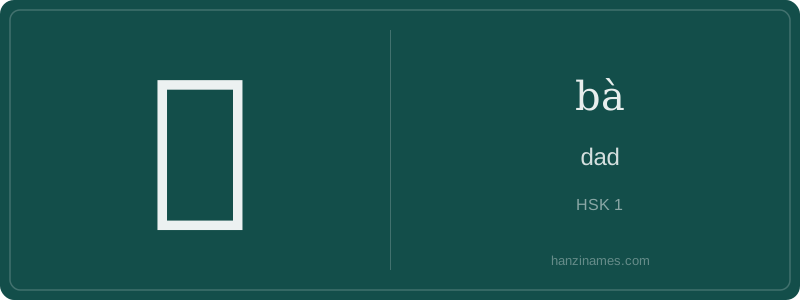
In modern Mandarin, 爸 is the universal, affectionate, informal word for 'father', used by children and adults alike in speech and casual writing. It appears in HSK 1 textbooks, family chats, and social media—never in formal documents or official titles (where 父亲 fùqin prevails). Common phrases include '我爸' (wǒ bà, 'my dad') and '老爸' (lǎo bā, 'old dad', a warm, teasing term). No historical idiom centers on 爸 alone, but it features in compound terms like '爸妈' (bàmā, 'parents'), attested in 1930s language surveys.
The character is not pictographic—it evolved as a phono-semantic compound during the Han dynasty. Its left radical 父 is a stylized depiction of a hand holding a ceremonial staff (signifying paternal authority), while 巴 was borrowed for sound. Modern stroke order (starting with the father radical’s top dot) reflects standardized script reform in 1956—not ancient inscription practice.
As an archaeologist brushing dust from a Han dynasty bamboo slip, I find 爸 not etched in oracle bone but emerging later—its earliest confirmed forms appear in Eastern Han texts and colloquial glossaries. Unlike ancient kinship terms like 父 (fù), which carried ritual weight and formal authority, 爸 was likely born in spoken vernacular: a reduplicative, affectionate diminutive, echoing the infantile babbling pattern seen cross-linguistically (cf. 'papa', 'baba'). Its phonetic simplicity made it stick—and survive.
This character’s eight strokes conceal no hidden pictograph of a patriarchal throne or ancestral tablet. Instead, its structure is transparently semantic-phonetic: the radical 父 (father) anchors meaning, while the right component 巴 (bā) provides approximate sound—though pronunciation shifted from Middle Chinese *pæ to modern bà. Crucially, 巴 itself once meant 'to cling' or 'to long for', subtly reinforcing emotional closeness—a linguistic fossil of familial yearning.
Excavating usage across dynasties, we see 爸 shift from informal speech to written acceptance only after the 20th century. Pre-Ming texts rarely use it; it appears in Ming-Qing vernacular novels (e.g., Golden Lotus) as domestic dialogue, signaling intimacy rather than status. By the Republican era, literacy reforms and children’s primers standardized 爸 as the default spoken term for 'dad'—a quiet revolution where colloquial warmth displaced classical formality in everyday writing.
Example Sentences
Common Compounds
Similar Characters — Don't Mix These Up
Your First Step into Chinese Culture: Get a Chinese Name
Every journey into Chinese begins with a name. Use our free Chinese name generator to create a meaningful, personalized Chinese name that fits you perfectly.
Get My Chinese Name →