浓
Character Story & Explanation
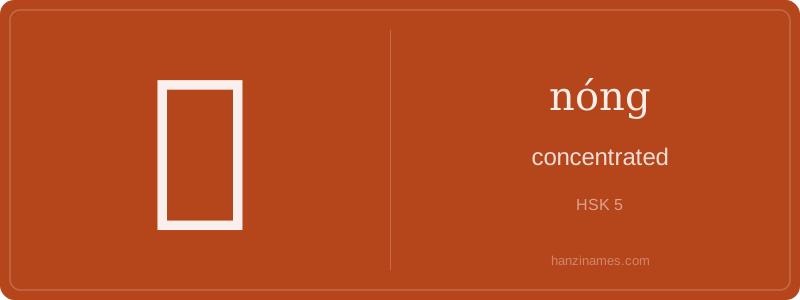
浓 is ubiquitous in modern Mandarin: used daily in food (浓汤), weather reports (浓雾), media (浓重口音), and literature (浓墨重彩). It appears in the idiom 浓墨重彩 (nóng mò zhòng cǎi), meaning 'vivid and forceful expression', originally describing traditional ink-wash painting techniques documented since the Song Dynasty. The phrase entered literary criticism by the Ming–Qing period to praise stylistically rich writing.
The character’s form combines 氵 (water radical) and 农 (nóng, 'agriculture') as phonetic component. While not a pictograph, its structure reflects ancient association: water + farming → fertile, abundant, dense growth. No oracle-bone or bronze script form survives; earliest attestation is in seal script (c. 3rd c. BCE), where 农 already served as sound loan. Today, Chinese learners practice it in HSK 5 vocabulary lists focusing on descriptive nuance.
浓 (nóng) conveys intensity—especially of physical properties like density, richness, or saturation. Unlike English 'concentrated', which leans scientific (e.g., concentrated acid), 浓 carries strong sensory and emotional resonance: a浓 coffee, a浓 accent, or浓情 (intense affection). It implies depth achieved through accumulation—not just chemical strength, but cultural weight: think of浓墨重彩 (thick ink, heavy color), a classical painting term evoking bold expressiveness.
In Western contexts, 'concentrated' often signals reduction or purification (e.g., concentrate juice by removing water), while 浓 can signify *unadulterated presence*: a浓雾 isn’t ‘reduced fog’—it’s fog so thick it obscures vision, embodying impenetrable atmosphere. This reflects Chinese aesthetic values where intensity arises from fullness, not subtraction—akin to how a浓香 (rich aroma) in aged Shaoxing wine is prized precisely for its layered, unfiltered complexity.
Culturally, 浓 resists neutral objectivity. Calling a relationship 浓情 isn’t clinical—it’s poetic, even slightly romanticized, echoing Confucian emphasis on deep, embodied feeling. In contrast, English ‘intense’ may imply stress or instability. 浓 thus bridges material and affective realms seamlessly—a linguistic artifact of China’s holistic worldview, where flavor, emotion, color, and moral gravity share the same lexical root: 氵 (water radical), reminding us that even abstraction flows from elemental substance.
Example Sentences
Common Compounds
Similar Characters — Don't Mix These Up
Your First Step into Chinese Culture: Get a Chinese Name
Every journey into Chinese begins with a name. Use our free Chinese name generator to create a meaningful, personalized Chinese name that fits you perfectly.
Get My Chinese Name →