粮
Character Story & Explanation
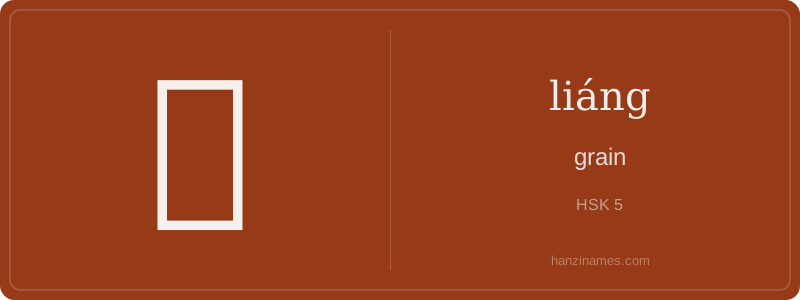
粮 is central to China’s food security policy and daily life: it appears in official terms like 粮食安全 (liángshí ānquán, 'food security') and historical institutions like the State Grain Reserves Administration. A common idiom is 民以食为天,食以粮为本 (mín yǐ shí wéi tiān, shí yǐ liáng wéi běn)—'The people regard food as heaven; food rests on grain as its foundation'—quoted in official documents since the 1950s. It’s also used in everyday contexts like supermarket signage (粮油 store: 'grain and oil').
The character’s form is documented from the Warring States period onward. While no oracle bone version exists, its seal script (c. 3rd c. BCE) clearly combines 米 (rice) + 良 (phonetic/semantic component meaning 'good, proper'). This reflects its functional origin: grain deemed 'fit for consumption and storage', not a pictorial depiction of a sheaf or stalk.
As an archaeologist brushing dust from a Han dynasty bamboo slip, I find 粮 inscribed in clerical script—its 米 (rice) radical unmistakably anchoring it to sustenance, while the 良 (liáng) component signals ‘good’ or ‘excellent’, historically implying *high-quality, edible grain*. This isn’t abstract symbolism: grain was currency, tax, and survival. The character emerges fully formed by the Western Han (206 BCE–9 CE), reflecting state granaries that fed armies and stabilized empires.
Excavations at the Hangu Pass granary ruins reveal stamped pottery jars bearing early variants of 粮—proof it functioned as both administrative label and semantic unit. Unlike pictographic predecessors, this character is phono-semantic: 米 conveys meaning (cereal), 良 provides pronunciation and nuance (‘sound, reliable, fit for use’). No oracle bone form exists—it’s a later, bureaucratic innovation born from logistical necessity, not ritual divination.
Its thirteen strokes encode agrarian governance: the 米 radical’s six strokes mimic scattered rice grains; the 良 component’s seven strokes echo tally marks used in grain inventories. Even today, the stroke order—beginning with the dot of 米—mirrors ancient scribes’ practice: first mark the substance, then certify its quality. This isn’t calligraphy; it’s archival syntax carved in ink and intent.
Example Sentences
Common Compounds
Similar Characters — Don't Mix These Up
Your First Step into Chinese Culture: Get a Chinese Name
Every journey into Chinese begins with a name. Use our free Chinese name generator to create a meaningful, personalized Chinese name that fits you perfectly.
Get My Chinese Name →