置
Character Story & Explanation
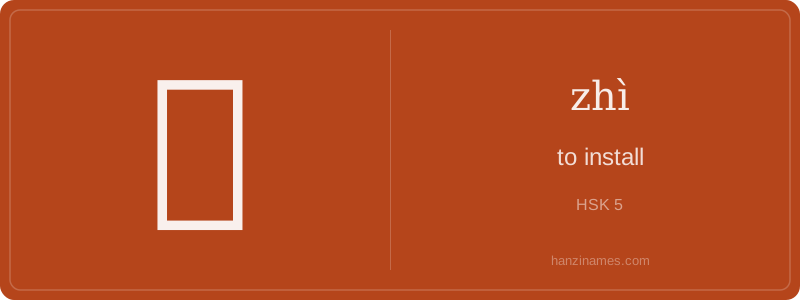
置 is widely used in modern Mandarin in administrative, technological, and legal contexts: e.g., ‘置顶’ (pin a post), ‘置办’ (procure goods for an event), and ‘设置’ (set up a system). It appears in classical texts such as the *Book of Han*, where it denotes official appointments—‘置郡县’ (establish commanderies and counties). A well-known idiom is ‘置之度外’ (zhì zhī dù wài), meaning ‘to set aside concerns’, reflecting its core sense of intentional removal from consideration.
The character’s seal script form (c. 3rd c. BCE) shows 罒 (net radical, here functioning phonetically) atop 直 (zhí, ‘straight’), originally indicating ‘to place straight/true’. While not pictographic, its structure reflects conceptual precision: correct placement requires alignment with principle—echoing Daoist and Confucian ideals of natural and moral order.
The character 置 (zhì) embodies a quiet but profound aspect of the Chinese worldview: intentionality in placement. Unlike passive verbs like 'put' or 'place', 置 conveys deliberate, often formal or institutional arrangement—whether installing software, appointing officials, or setting up rituals. This reflects Confucian values where proper positioning—of people in hierarchy, objects in space, ideas in discourse—is foundational to harmony and order.
In classical thought, 置 appears frequently in texts like the *Records of the Grand Historian*, describing the establishment of offices, laws, and border garrisons. Its use signals not mere physical placement but the act of legitimizing structure—making something officially functional within a system. This mirrors the Chinese cultural emphasis on relational integrity: things gain meaning through their situatedness within a larger, purposeful whole.
Modern usage preserves this gravity: you don’t casually ‘置’ your coffee cup—you ‘置’ a server, ‘置’ a policy, or ‘置’ trust in an institution. Even in digital life, ‘安装’ (ānzhuāng, ‘install’) is more common for apps, yet 置 persists in formal contexts like ‘置顶’ (zhìdǐng, ‘pin to top’)—a metaphorical extension where importance is conferred by position. Thus, 置 reveals how Chinese language encodes philosophy: to place is to authorize, to install is to integrate into order.
Example Sentences
Common Compounds
Similar Characters — Don't Mix These Up
Your First Step into Chinese Culture: Get a Chinese Name
Every journey into Chinese begins with a name. Use our free Chinese name generator to create a meaningful, personalized Chinese name that fits you perfectly.
Get My Chinese Name →