骂
Character Story & Explanation
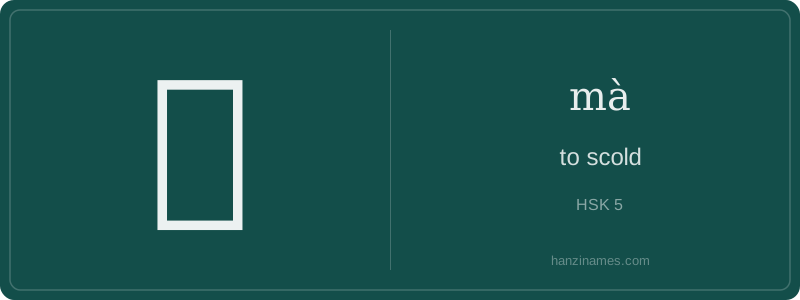
In contemporary China, 骂 is widely used in spoken and online language to describe heated verbal confrontations — from street arguments to viral Weibo posts condemning unethical behavior. Common phrases include 骂人 (màrén, 'to insult someone') and 破口大骂 (pòkǒu dà mà, 'to erupt in furious scolding'), the latter appearing in news reports about public incidents. Historically, the term appears in Ming-Qing vernacular novels like Water Margin, where outlaws ‘scold’ corrupt officials — reflecting its long-standing association with moral outrage.
The character’s form is not pictographic but phono-semantic: 口 (kǒu, mouth) is the semantic radical, indicating speech; 马 (mǎ) serves as the phonetic component, approximating the sound. Though 马 means 'horse', here it contributes only pronunciation — a common feature in later-developed characters (post-Oracle Bone Script). No ancient pictorial origin exists for 骂; it first appeared in standardized clerical script during the Han dynasty.
The character 骂 (mà) vividly captures the act of harsh verbal reprimand — not just mild criticism, but sharp, emotionally charged scolding. Its radical 口 (mouth) signals speech-related meaning, while the right component 马 (mǎ, horse) is phonetic, hinting at pronunciation. In modern usage, it carries strong negative connotations and appears in formal writing, media reports on public disputes, and everyday complaints — always implying intensity and loss of composure.
Unlike gentler synonyms like 批评 (pīpíng, 'to criticize') or 教训 (jiàoxùn, 'to admonish'), 骂 implies unfiltered anger and often breaches social decorum. It’s common in contexts where authority is challenged or etiquette violated — think a parent yelling at a child for dangerous behavior, or netizens ‘scolding’ a celebrity for insensitive remarks online. The tone is rarely constructive; it’s cathartic, punitive, or performative.
This character reflects a cultural awareness of linguistic power: words can wound, and public shaming via speech remains socially potent. While Confucian ideals emphasize respectful remonstration (谏 jiàn), 骂 occupies the opposite pole — raw, unmediated expression. Its HSK 5 placement signals learners must grasp not only its definition but also its pragmatic weight: when and why Chinese speakers choose this word over milder alternatives, especially in digital discourse where ‘keyboard scolding’ (键盘骂 kēpán mà) has become a recognized phenomenon.
Example Sentences
Common Compounds
Similar Characters — Don't Mix These Up
Your First Step into Chinese Culture: Get a Chinese Name
Every journey into Chinese begins with a name. Use our free Chinese name generator to create a meaningful, personalized Chinese name that fits you perfectly.
Get My Chinese Name →