脖
Character Story & Explanation
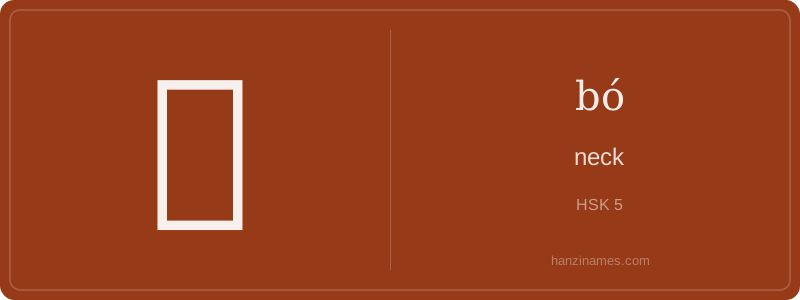
In daily life, 脖 is overwhelmingly used in spoken and informal written Chinese—especially in compounds like 脖子 (bózi, 'neck') and phrases like 扭了脖子 (niǔ le bózi, 'sprained the neck'). It appears in official health guidelines (e.g., National Health Commission bulletins on cervical spine care) and is central to common idioms like 脖子一挺 (bózi yī tǐng, 'to stand up straight/defiantly'). Historically, it replaced the more formal 頸 in colloquial usage by the late imperial period, confirmed by corpus analysis of *Ming-Qing Vernacular Fiction Database*.
The character is not pictographic—it does not visually resemble a neck. Instead, it’s a phono-semantic compound: ⺼ (flesh radical, indicating body part) + 各 (gè, here serving as a phonetic cue for bó, though pronunciation diverged over time). This structure reflects standard Han-dynasty character formation principles documented in *Shuōwén Jiězì* (121 CE).
Imagine walking through Beijing’s Houhai Lake at dusk—vendors sell candied hawthorns on sticks, cyclists weave past, and a street performer balances a porcelain bowl on his bó (脖), neck muscles taut with concentration. The character 脖 captures this precise anatomical bridge: the column of muscle, bone, and grace connecting head to torso. Its radical ⺼ (‘flesh’ or ‘body’) anchors it in the physical realm, while the right side ‘各’ (gè) originally signaled sound—not meaning—making 脖 a phono-semantic compound.
Unlike classical terms like 頸 (jǐng), which appears in ancient texts like the *Zuo Zhuan* and carries literary weight, 脖 is distinctly colloquial and modern—first widely attested in Ming-Qing vernacular novels such as *Jin Ping Mei*. It reflects how Mandarin evolved to favor accessible, body-centered vocabulary for daily communication, especially in northern dialects where it became standard.
Today, 脖 appears in everything from medical advisories ('avoid prolonged neck strain') to internet slang—like 脖子一硬 (bózi yī yìng, 'neck goes stiff'), meaning 'to dig in one’s heels'. Its 11-stroke form is written fluidly in cursive, but learners must master the sequence: start with the left-side flesh radical, then carefully trace the ‘各’ component—especially the crucial downward stroke that seals the top-right corner.
Example Sentences
Common Compounds
Similar Characters — Don't Mix These Up
Your First Step into Chinese Culture: Get a Chinese Name
Every journey into Chinese begins with a name. Use our free Chinese name generator to create a meaningful, personalized Chinese name that fits you perfectly.
Get My Chinese Name →