卧
Character Story & Explanation
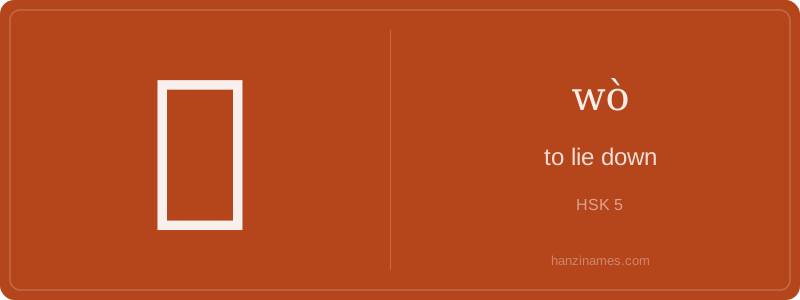
In daily Mandarin, 卧 is rarely used as a standalone verb (‘I lie down’ → 我躺下, not 我卧). Instead, it thrives in formal, medical, literary, or idiomatic contexts: 卧室 (wòshì, ‘bedroom’), 卧底 (wòdǐ, ‘undercover agent’), and the famous idiom 卧薪尝胆 (wòxīn chángdǎn, ‘sleep on firewood and taste gall’ — symbolizing enduring hardship for revenge, from the story of King Goujian of Yue, recorded in the Records of the Grand Historian, c. 94 BCE).
The character’s earliest reliably attested form appears in Warring States bamboo slips (475–221 BCE) as 臣 beneath 卜 — not a pictograph of a body, but a phono-semantic compound. 臣 provided meaning (submissive posture), 卜 indicated pronunciation. No oracle bone variant is confirmed; its origin is firmly traced to early clerical script evolution, not visual imitation.
Our detective begins at the Shāng dynasty oracle bones — but here, no clear pictograph of a person lying down survives for 卧. Instead, early forms in bronze inscriptions (c. 11th–3rd c. BCE) show 臣 (a kneeling servant or ‘subject’ radical) combined with 人 (person) or 卜 (divination crack), suggesting posture under authority — not just physical reclining, but submission or rest in deference. This hints that 卧 carried connotations of yielding, pause, or ritual stillness long before modern usage.
By the Hàn dynasty, seal script standardized 卧 as 臣 + 卜 — a structural mystery: why 卜? Scholars like Qiu Xigui note it likely served phonetic function (卜 *buk > wò via sound shift), not meaning. The radical 臣 persisted, anchoring the character’s semantic field to human posture and social positioning — lying down as both bodily act and metaphorical withdrawal from action.
Modern standard script retains the 8-stroke form: three horizontal strokes atop 臣, then 卜 below. Its elegance belies its functional weight — 卧 rarely stands alone in speech, yet appears crucially in compound verbs (e.g., 卧床 ‘bedridden’) and literary idioms (e.g., 卧薪尝胆). It’s a quiet verb, reserved for intentional, often solemn repose — never casual lounging. That restraint makes it a linguistic fingerprint of classical Chinese sensibility.
Example Sentences
Common Compounds
Similar Characters — Don't Mix These Up
Your First Step into Chinese Culture: Get a Chinese Name
Every journey into Chinese begins with a name. Use our free Chinese name generator to create a meaningful, personalized Chinese name that fits you perfectly.
Get My Chinese Name →