臭
Character Story & Explanation
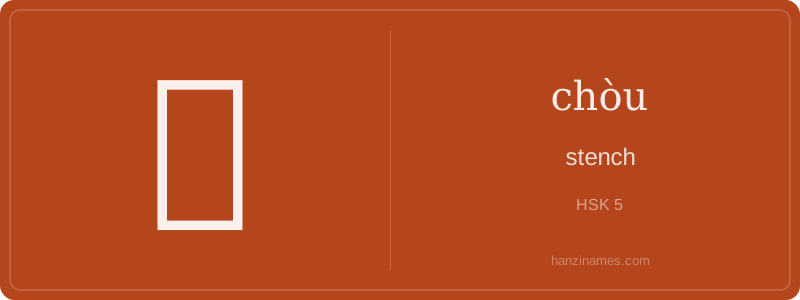
In modern Chinese, 臭 (chòu) is overwhelmingly used colloquially for 'stink' or 'smell bad'—as in 臭豆腐 (chòu dòufu, 'stinky tofu'), a beloved fermented snack with documented origins in Ming dynasty Jiangsu. It appears in idioms like 臭名昭著 (chòu míng zhāozhù, 'notorious'), recorded since the Qing dynasty, and in internet slang like 臭宝 (chòu bǎo, 'stinky treasure'), a playful self-deprecating term on Douyin. Historically, it carried moral weight: Confucian texts used 臭恶 (chòu è) to denote morally repugnant behavior.
The character combines 自 (zì, 'self/nose', radical) and 休 (xiū, originally 'to rest', here phonetic). Per the Shuōwén Jiězì, it was formed as a phono-semantic compound—not a pictograph. The 'nose' radical signals sensory perception; the 'rest' component approximates ancient pronunciation. No oracle-bone form exists; earliest forms appear on Warring States bamboo slips.
As an archaeologist brushing dust from a Han dynasty bamboo slip, I find 臭 inscribed not as a mere 'stench' but as a sensory relic—its ancient form captures the moment when breath (自, 'self' or 'nose') meets odor. The character’s earliest attested use in pre-Qin texts like the Shuōwén Jiězì (121 CE) defines it as 'xiù: the scent perceived through the nose', revealing its original neutrality—neither foul nor fragrant, but simply *perceived*. This semantic openness is rare among olfactory terms.
The shift from neutral 'scent' to predominantly negative 'stench' unfolded over centuries, mirroring cultural hygiene norms and literary tropes. By the Tang dynasty, 臭 overwhelmingly appears in pejorative contexts—'rotten grain', 'shameful conduct'. Yet the archaic reading xiù survives in classical compounds like 乳臭未干 (rǔ xiù wèi gān, 'milk-scent not yet dried'), preserving the original physiological sense of infantile breath.
This duality makes 臭 a linguistic palimpsest: beneath its modern stench lies an older, embodied epistemology—where 'knowing' (臭 as cognate with 臭知, 'olfactory cognition') meant apprehending reality through the nose. Even today, the character resists reduction: in medical classics, 臭 refers to diagnostic odors (e.g., urine scent indicating disease), honoring its ancient role as a conduit between body and world.
Example Sentences
Common Compounds
Similar Characters — Don't Mix These Up
Your First Step into Chinese Culture: Get a Chinese Name
Every journey into Chinese begins with a name. Use our free Chinese name generator to create a meaningful, personalized Chinese name that fits you perfectly.
Get My Chinese Name →