蔬
Character Story & Explanation
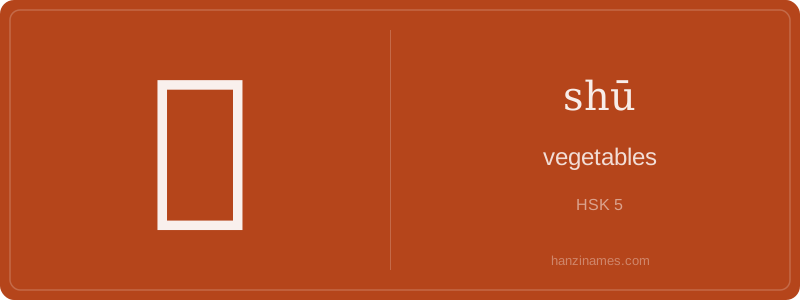
In modern Chinese life, 蔬 appears most frequently in compound words like 蔬菜 (shūcài, 'vegetables') and on supermarket signage, food safety labels, and government health campaigns (e.g., the National Nutrition Plan promoting 'half your plate as 蔬'). It rarely stands alone in speech—unlike English 'veg', you won’t hear someone say 'I bought some 蔬'—but it’s indispensable in formal, written, and institutional contexts.
The character is a clear phono-semantic compound: 艹 (grass radical) + 疏 (shū, phonetic and semantic hint). While 疏 originally meant 'sparse' or 'to unblock', its use here evokes cultivation—spacing plants for growth. No oracle-bone form exists; earliest verified inscriptions appear in Han-era bamboo slips documenting grain and vegetable quotas for granaries.
Our detective work begins with the radical 艹—'grass'—a telltale sign that this character belongs to the botanical family. It sits atop the phonetic component 疏 (shū), which provides both pronunciation and a subtle semantic echo: 'to thin out' or 'to loosen', evoking the cultivated, tended nature of vegetables—not wild weeds, but intentionally spaced, irrigated crops. This radical-phonetic structure is textbook for HSK 5 characters: logical, layered, and historically stable.
The lower part, 疏, isn’t just a sound-alike—it’s a clever semantic bridge. In classical agronomy texts like the *Qimin Yaoshu* (540 CE), 'thinning seedlings' (疏苗) was essential for healthy vegetable growth. So 蔬 subtly encodes horticultural wisdom: vegetables are plants *deliberately managed*, not merely gathered. This reflects how Chinese lexicography often embeds practical knowledge into character form.
Unlike ancient pictographs, 蔬 has no oracle-bone or bronze script attestation—it first appears in standardized clerical script during the Han dynasty, as agricultural writing formalized. Its late emergence aligns with the rise of systematic farming manuals and market-based vegetable trade in cities like Chang’an. The character didn’t emerge from myth or divination, but from bureaucracy, botany, and daily sustenance—a quiet testament to how language grows from soil, not sky.
Example Sentences
Common Compounds
Similar Characters — Don't Mix These Up
Your First Step into Chinese Culture: Get a Chinese Name
Every journey into Chinese begins with a name. Use our free Chinese name generator to create a meaningful, personalized Chinese name that fits you perfectly.
Get My Chinese Name →