装
Character Story & Explanation
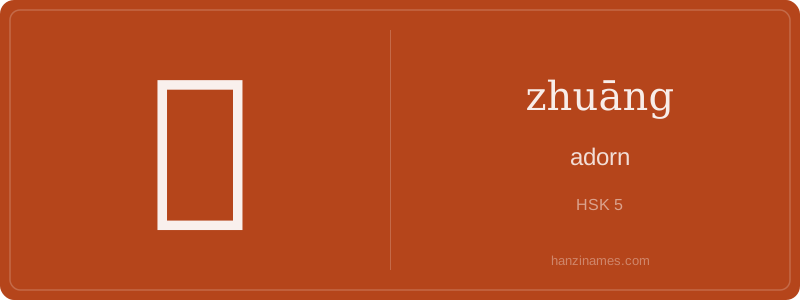
装 appears ubiquitously in modern Chinese: from smartphone apps labeled ‘安装’ (ānzhuāng, ‘install’) to daily phrases like ‘装作不知道’ (zhuāng zuò bù zhīdào, ‘pretend not to know’). Historically, it features in classical texts like the *Book of Rites*, prescribing ceremonial dress codes for rites and governance. Idioms such as ‘装腔作势’ (zhuāng qiāng zuò shì, ‘put on airs’) and ‘乔装打扮’ (qiáo zhuāng dǎ bàn, ‘disguise oneself’) attest to its long-standing semantic range spanning authenticity, role-play, and transformation.
The character’s seal script form (c. 3rd c. BCE) shows 衣 (yī, ‘clothing’) as the radical on the left, and 壮 (zhuàng, ‘strong, robust’) on the right—originally phonetic but later acquiring semantic resonance: adornment strengthens presence. Its 12-stroke structure visually anchors clothing (衣) as foundational, with deliberate, structured embellishment (壮) built upon it.
At first glance, 装 (zhuāng) evokes surface beauty—clothes, makeup, decoration—but in Chinese thought, adornment is never superficial. It reflects the Confucian ideal of ‘outer form expressing inner virtue’ (wén zhì bīn bīn): proper attire signals respect, role, and moral alignment. Even today, wearing a qipao for a wedding or donning academic robes isn’t mere fashion—it’s ritual embodiment of social harmony and self-cultivation.
This character embodies the Daoist-Confucian balance between authenticity and appropriateness. To ‘dress’ (装) is to mediate between one’s inner self and outer world—a conscious act of relational ethics. Unlike Western individualism that often privileges ‘being real’ over ‘playing a part’, Chinese tradition sees sincere performance—like a teacher dressing with dignity—as integral to integrity itself.
Moreover, 装 carries subtle duality: it means both ‘to adorn’ and ‘to pretend’. This linguistic tension reveals a profound cultural insight—that all social presentation involves intentional shaping, whether for reverence (装束, formal dress) or deception (假装, to pretend). The same strokes encode both honor and irony, reminding us that human expression is always layered, contextual, and ethically charged.
Example Sentences
Common Compounds
Similar Characters — Don't Mix These Up
Your First Step into Chinese Culture: Get a Chinese Name
Every journey into Chinese begins with a name. Use our free Chinese name generator to create a meaningful, personalized Chinese name that fits you perfectly.
Get My Chinese Name →