趁
Character Story & Explanation
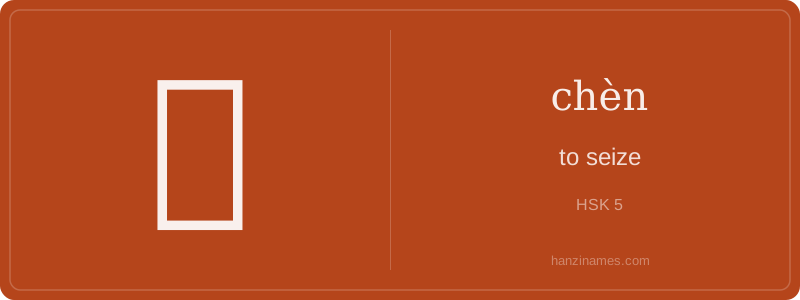
趁 is widely used in both spoken and written Mandarin, especially in set phrases like 趁热打铁 (chèn rè dǎ tiě, 'strike iron while hot')—a proverb dating back to at least the Ming dynasty, cited in classical texts such as Shuō Fú (c. 1592), emphasizing decisive action during optimal conditions. Modern usage includes common constructions like 趁…的时候 (chèn… de shíhou, 'while…') and compound verbs like 趁机 (chèn jī, 'seize the opportunity'). It appears frequently in news headlines, policy documents, and business strategy reports.
The character evolved from seal script (c. 3rd century BCE), where its form already combined 走 (walking radical) and 尞 (a phonetic component). Unlike pictographic characters (e.g., 日 for 'sun'), 趁 is phono-semantic—no documented oracle bone form exists. Today, Chinese speakers commonly use it in real-time decision-making contexts: e.g., parents saying 趁孩子还小,多陪陪他 (chèn háizi hái xiǎo, duō péi péi tā) — 'While the child is still young, spend more time with him.'
The character 趁 (chèn) embodies a distinctly pragmatic and time-sensitive worldview in Chinese culture—where opportunity is not abstract, but fleeting, situational, and must be seized with bodily readiness. Its radical 走 (zǒu, 'to walk/run') signals action in motion, while the phonetic component 尞 (liǎo, archaic for 'tall' or 'high') subtly evokes elevation of perspective: to see and act upon an opening before it closes. This reflects Confucian-Mencian values of timely virtue—acting rightly *when the moment allows*, not just in principle.
Unlike Western notions of seizing control, 趁 conveys alignment rather than domination: one ‘rides along’ with favorable conditions—weather, mood, social rhythm, or political climate—like a boat catching the tide. It implies humility before circumstance; success depends on discernment (明察), not force. This resonates with Daoist ideas of wu-wei (effortless action): true efficacy arises from synchronizing with natural or social flow, not resisting it.
In daily life, 趁 reveals how Chinese thought treats time as relational and textured—not a neutral line, but a landscape of openings and closures. To say 趁热吃 (chèn rè chī, 'eat while hot') is not just culinary advice; it’s a micro-ethic of presence and responsiveness. Even in modern contexts—like 趁早规划 (chèn zǎo guīhuà, 'plan early')—the character carries quiet urgency rooted in agrarian rhythms and historical instability, where missed chances could mean hunger or loss of face.
Example Sentences
Common Compounds
Similar Characters — Don't Mix These Up
Your First Step into Chinese Culture: Get a Chinese Name
Every journey into Chinese begins with a name. Use our free Chinese name generator to create a meaningful, personalized Chinese name that fits you perfectly.
Get My Chinese Name →