返
Character Story & Explanation
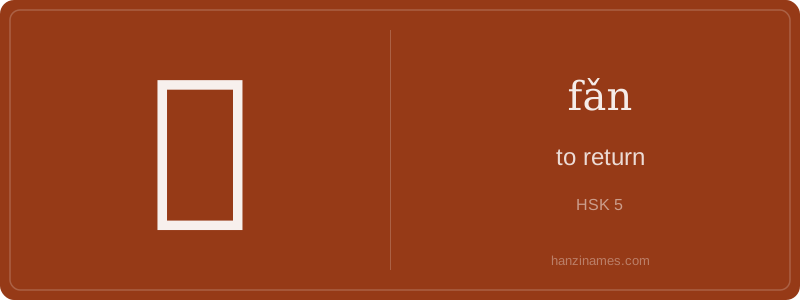
In modern Chinese, 返 is indispensable in logistics, travel, and bureaucracy: ‘返程’ (fǎnchéng, return journey) appears on train tickets and flight itineraries; ‘返工’ (fǎngōng, rework) is standard in manufacturing QA reports; and ‘返校’ (fǎnxiào, return to school) marks the start of semesters nationwide. It anchors idioms like ‘一去不返’ (yī qù bù fǎn, ‘gone without return’), used historically in classical texts like the *Zuo Zhuan* to describe irreversible departures — including diplomatic missions gone awry.
The character’s written form is a documented phono-semantic compound: 反 (fǎn) provides both pronunciation and the core idea of reversal, while 辶 (the walking radical) specifies motion. No oracle bone or bronze inscription of 返 exists — its earliest verified forms appear in Han-era clerical script, confirming its late but purpose-built origin in administrative writing.
Our detective work begins with the modern character 返 — a deceptively simple 7-stroke glyph. At first glance, it’s just ‘go back’ — but peel back its layers, and you find a masterclass in Chinese semantic logic. The left side, 反 (fǎn), means ‘to reverse’ or ‘oppose’, acting as both sound and meaning clue; the right radical 辶 (chuò), the ‘walking’ or ‘movement’ radical, signals motion — specifically directional motion toward a prior point. Together, they form a compact visual argument: ‘reverse one’s movement’ = return.
This character didn’t emerge from abstraction but from concrete administrative need. During the Warring States and Han periods, returning documents, envoys, or conscripts was so frequent that scribes needed a precise, unambiguous logograph — not just ‘go’ (往) or ‘come’ (来), but ‘go *back* to origin’. 返 filled that lexical gap with surgical precision, distinguishing itself from homophones like 饭 (fàn, ‘meal’) or 贩 (fàn, ‘to trade’) by its radical and structure.
Its evolution reflects linguistic pragmatism over poetic metaphor. Unlike characters born from pictographs (e.g., 日 for ‘sun’), 返 is a phono-semantic compound — no ancient oracle bone form survives, and its earliest attested use appears in Han dynasty bamboo slips and clerical script inscriptions, always in contexts of repatriation, document re-submission, or ritual re-entry. Its stability across 2,000 years testifies less to mystical origins and more to its functional perfection: one radical for motion, one for reversal — no extra strokes, no ambiguity.
Example Sentences
Common Compounds
Similar Characters — Don't Mix These Up
Your First Step into Chinese Culture: Get a Chinese Name
Every journey into Chinese begins with a name. Use our free Chinese name generator to create a meaningful, personalized Chinese name that fits you perfectly.
Get My Chinese Name →