靠
Character Story & Explanation
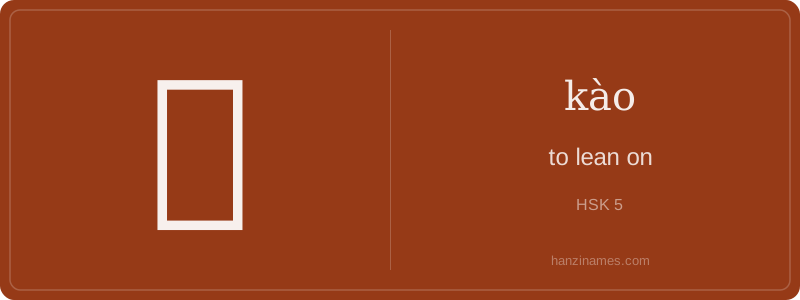
In modern Chinese daily life, 靠 most commonly appears in phrases like 靠边 (kào biān, 'to move to the side'), 靠谱 (kàopǔ, 'reliable'), and 靠山 (kào shān, 'a powerful protector'). The idiom 靠山吃山 (kào shān chī shān, 'live off the mountain one leans on') reflects sustainable local resource use—and appears in government rural development reports since the 1980s. Historically, 靠 first appeared in Song dynasty printed texts meaning 'to be adjacent to' or 'to depend upon', later solidifying its dual physical/figurative sense by Ming-Qing vernacular fiction.
The character 靠 is not pictographic—it evolved from phonosemantic construction. Its left side 非 (fēi) is the radical (originally meaning 'not' or 'feather', but here purely phonetic), while the right side 告 (gào) provides sound. Though not visually representational, its stroke-heavy form (15 strokes) mirrors the effort implied in leaning—requiring balance, support, and sustained contact.
Imagine stepping into a bustling Beijing subway station at rush hour. A tired office worker, briefcase in hand, exhales deeply and leans against the cool ceramic tile wall—back straight, shoulder gently resting on the surface. This quiet, instinctive act of support is precisely what 靠 (kào) captures: not just physical contact, but reliance, dependence, and the subtle surrender to something stable. It’s a moment of human vulnerability made visible through posture and proximity.
The character 靠 evokes intimacy with support—whether leaning on a friend’s shoulder after bad news, or resting a bicycle against a shopfront in a narrow Shanghai alley. Unlike passive verbs like ‘stand’, 靠 implies intentionality and trust: you choose *what* to lean on, and that choice reveals your resources—people, objects, or even abstract things like luck or connections. It’s a verb rich with social nuance, often hinting at who holds power or influence in a relationship.
In Chinese culture, 靠 carries layers beyond physics. To say ‘靠关系’ (kào guānxi) is to acknowledge the reality of network-based opportunity—a socially accepted, if sometimes quietly critiqued, path to advancement. Even in classical texts like the *Dream of the Red Chamber*, characters ‘lean on’ elders for protection or patronage. So when someone says ‘我靠不住’ (wǒ kào bu zhù), they’re not just refusing physical support—they’re declining moral or practical responsibility. 靠 is weight, both literal and relational.
Example Sentences
Common Compounds
Similar Characters — Don't Mix These Up
Your First Step into Chinese Culture: Get a Chinese Name
Every journey into Chinese begins with a name. Use our free Chinese name generator to create a meaningful, personalized Chinese name that fits you perfectly.
Get My Chinese Name →