髦
Character Story & Explanation
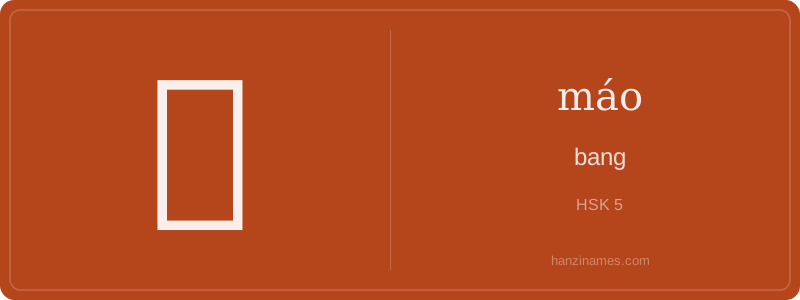
Historically, 髦 appears in the Classic of Poetry (Shījīng, c. 11th–7th century BCE) and later texts like the Book of Rites (Lǐjì), where it refers specifically to the front lock of hair worn by adolescent males before their coming-of-age ceremony (guānlǐ). This hairstyle marked the transition from boyhood to scholarly or official status. Today, 髦 is almost never used independently in daily speech — instead, it lives on in literary compounds like 髦士 (máoshì, 'outstanding young scholar') and idioms such as 年轻髦俊 (niánqīng máojùn, 'youthful and talented').
The character is not pictographic; its form evolved from seal script, combining 髟 (hair radical) and 毛 (hair, phonetic component). There’s no oracle bone record — its earliest confirmed form is in Warring States bamboo slips. In contemporary life, you’ll most likely encounter it in formal writing, academic essays on Chinese culture, or historical dramas’ subtitles — not in grocery lists or WeChat chats!
Hi students! Let’s learn the character 髦 (máo), which means 'bang' — the fringe of hair that falls across the forehead. It’s a relatively rare but elegant character, often seen in classical or literary contexts. Notice its radical 髟 (biāo), which appears in many hair-related characters like 髻 (jì, 'bun') and 髻 (bìn, 'temple hair'). This radical tells us right away that the character is connected to hair — a great clue for remembering meaning!
The character has 14 strokes and belongs to HSK Level 5, so it’s for intermediate learners. Don’t worry if it looks complex — break it down: top part is 髟 (10 strokes, representing long, flowing hair), and bottom is 毛 (máo, 'hair'), reinforcing the meaning. This repetition is intentional: it’s a semantic-phonetic compound where 毛 also provides the sound.
Although rarely used alone today, 髦 carries cultural weight — historically, it described the distinctive hairstyle of young noble men in ancient China, symbolizing youth and promise. In modern usage, it survives mostly in fixed expressions and idioms. Mastering 髦 helps you read classical poetry, historical texts, and even understand subtle metaphors about talent or potential — because yes, this little 'bang' can mean much more than just hair!
Example Sentences
Common Compounds
Similar Characters — Don't Mix These Up
Your First Step into Chinese Culture: Get a Chinese Name
Every journey into Chinese begins with a name. Use our free Chinese name generator to create a meaningful, personalized Chinese name that fits you perfectly.
Get My Chinese Name →