卸
Character Story & Explanation
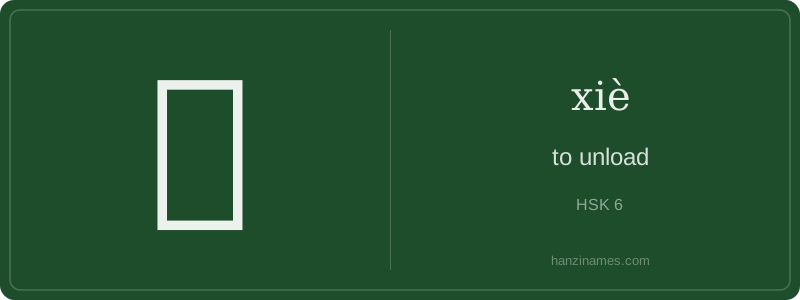
In modern Chinese, 卸 appears frequently in logistics (卸货 xiè huò, 'to unload goods'), computing (卸载 xièzǎi, 'to uninstall software'), and formal contexts like political transitions (卸任 xièrèn, 'to step down from office'). A well-documented idiom is 卸磨杀驴 (xiè mò shā lǘ)—'unload the millstone then slaughter the donkey'—critiquing betrayal after utility ends, recorded in Ming-Qing vernacular literature and still used today in media and satire.
The character’s earliest attested form appears in Han dynasty clerical script, combining 午 (wǔ, phonetic, also evoking 'midpoint/peak') and 卩 (jié, radical meaning 'seal' or 'kneeling official'). It was not pictographic but phono-semantic: no oracle-bone or bronze inscriptions survive for 卸, confirming its later origin as a functional administrative term for regulated removal.
The character 卸 (xiè) embodies a profound Chinese philosophical stance on release and transition—not merely physical unloading, but the conscious shedding of burdens, roles, or expectations. In Confucian and Daoist thought, 'letting go' is not passive defeat but strategic alignment with natural flow (道, dào);卸 reflects this wisdom in action, whether卸下职务 (stepping down from office) or卸下心防 (lowering emotional defenses). It honors timing: unloading only when the vessel is full, the season ripe, or the duty fulfilled.
Its radical 卩—a kneeling figure with bound hands—originally denoted ritual submission or official seals, hinting that unloading often occurs within structured social frameworks: tax collection, military rotation, bureaucratic succession. Thus,卸 is never chaotic abandonment; it’s a governed, respectful transfer—echoing China’s long tradition of orderly transition in governance, commerce, and personal life.
This worldview sees change not as rupture but as cyclical recalibration. Just as a cart must卸 cargo before ascending a mountain, a person must卸旧 identity to embrace new growth. The nine strokes themselves trace a descent—from the top component (午, wǔ, representing midday/peak) down through 卩—visually enacting the act of lowering, releasing, and grounding. In daily use, 卸 quietly affirms that true strength lies not in holding on, but in knowing what—and when—to let go.
Example Sentences
Common Compounds
Similar Characters — Don't Mix These Up
Your First Step into Chinese Culture: Get a Chinese Name
Every journey into Chinese begins with a name. Use our free Chinese name generator to create a meaningful, personalized Chinese name that fits you perfectly.
Get My Chinese Name →