吝
Character Story & Explanation
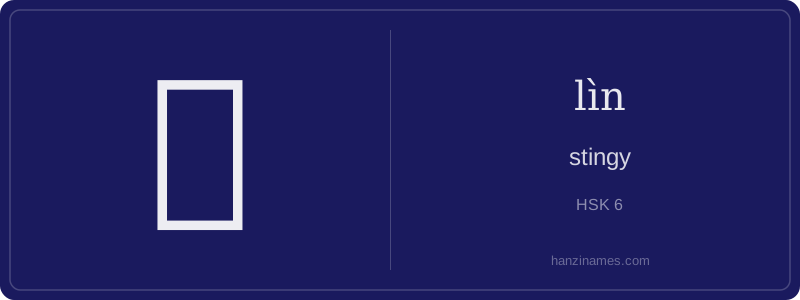
Historically, 吝 appears in classical texts like the Yijing (I Ching), where it conveys hesitation or reluctance—e.g., ‘in difficulty, one becomes 吝’—referring to emotional or moral constriction, not just money. In modern usage, it’s almost always paired: 吝啬 (lìnsè, 'stingy'), 吝惜 (lìnxī, 'to begrudge'), or 吝啬鬼 (a pejorative term for a miser). It’s rare as a standalone verb; Chinese speakers prefer phrases over isolated 吝.
The character’s earliest documented form (in bronze inscriptions) shows 口 + 文 (wén), but scholars agree the structure evolved phonetically—not pictorially. Today, you’ll see it in financial journalism criticizing corporate cost-cutting, or literature describing emotionally closed characters—never in friendly texting!
Hi students! Let’s learn 吝 (lìn), a character meaning 'stingy' or 'niggardly'. It’s pronounced with the fourth tone—sharp and falling—and has only 7 strokes, making it relatively simple to write. The radical is 口 (kǒu), meaning 'mouth', which often hints at speech or expression. Though 吝 isn’t about speaking directly, its historical use relates to *withholding*—like holding back words or resources from others.
This character appears mostly in formal or literary contexts—not daily chit-chat. You’ll rarely hear someone say ‘He’s 吝!’ in casual conversation; instead, it shows up in written critiques, essays, or classical phrases. Its tone is mildly negative but not harsh like ‘greedy’—more about excessive caution with giving, sharing, or spending.
At HSK Level 6, 吝 marks advanced vocabulary. Don’t worry if it feels abstract: many learners first meet it in idioms like 吝啬鬼 (lìnsèguǐ, 'miser') or compounds like 吝惜 (lìnxī, 'to begrudge'). Focus on recognizing it in context and understanding its nuance—not just ‘cheap’, but *reluctant to part with anything*, even praise or time.
Example Sentences
Common Compounds
Similar Characters — Don't Mix These Up
Your First Step into Chinese Culture: Get a Chinese Name
Every journey into Chinese begins with a name. Use our free Chinese name generator to create a meaningful, personalized Chinese name that fits you perfectly.
Get My Chinese Name →