坑
Character Story & Explanation
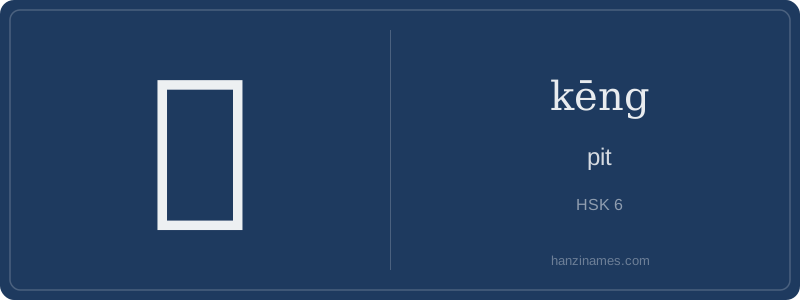
In daily life, 坑 is widely used in construction, mining, and internet slang. You’ll see it in official terms like 基坑 (jī kēng, 'foundation pit') on engineering blueprints, and in popular phrases like 坑爹 (kēng diē, 'swindle Dad' — a humorous, hyperbolic way to say 'so disappointing it feels like betrayal'). The idiom 落井下石 (luò jǐng xià shí, 'throw stones into a well after someone falls in') historically references moral failure — where the 'well' (井) is conceptually close to 坑 as a deep, dangerous hollow.
The character first appeared in seal script (c. 3rd century BCE), clearly showing 土 + 亢 — not a pictograph of a pit, but a phono-semantic compound. Modern usage leans heavily on its metaphorical extension: a ‘trap’ or ‘deceptive situation’ — verified by its frequency in China’s Cyberspace Administration’s 2022 report on online fraud terminology.
Hi students! Let’s look at 坑 (kēng), a Level 6 HSK character with just 7 strokes and the ‘earth’ radical 土 — which tells us right away it’s related to ground, soil, or terrain. Visually, it combines 土 (earth) on the left with 亢 (kàng, originally meaning ‘high’ or ‘raised’, but here acting phonetically) on the right. Though it literally means ‘pit’ or ‘hollow’, in modern Chinese it’s often used metaphorically — like when someone says you’ve been ‘dug into a pit’ (i.e., tricked!).
This character appears in both concrete and abstract contexts: a literal construction site pit (施工坑), a mining shaft (矿坑), or even online slang like 坑人 (kēng rén) — ‘to swindle someone’. Its dual nature makes it rich for vocabulary building, especially as learners advance toward fluency and idiomatic expression.
Don’t confuse 坑 with similar-looking characters — its 土 radical is key! Since it’s an HSK 6 word, it’s less about basic survival language and more about understanding nuanced communication: news reports on infrastructure, historical texts about ancient tombs, or even sarcastic WeChat comments like ‘这又是个大坑!’ (‘Another big trap!’). Mastering 坑 helps you read between the lines — and avoid real and figurative holes!
Example Sentences
Common Compounds
Similar Characters — Don't Mix These Up
Your First Step into Chinese Culture: Get a Chinese Name
Every journey into Chinese begins with a name. Use our free Chinese name generator to create a meaningful, personalized Chinese name that fits you perfectly.
Get My Chinese Name →