帆
Character Story & Explanation
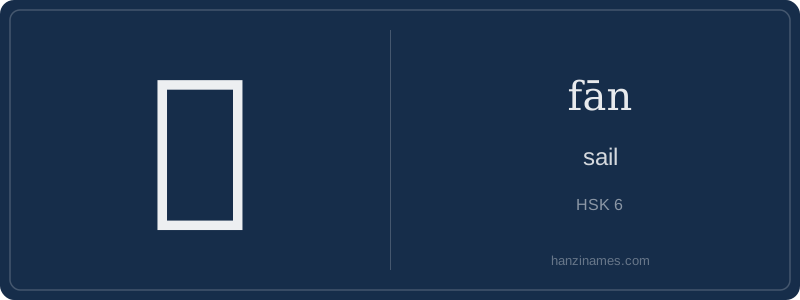
帆 has been used continuously since at least the Han dynasty (206 BCE–220 CE) in maritime records and poetry; Tang dynasty poets like Li Bai frequently employed it metaphorically — e.g., ‘孤帆远影碧空尽’ (‘The lone sail’s shadow fades into the blue sky’) — reflecting its enduring cultural resonance as a symbol of departure and aspiration. Today, it appears most commonly in compound nouns (e.g., 帆船, 帆板) and idioms like 一帆风顺 (yī fān fēng shùn, 'smooth sailing'), widely used as a New Year blessing.
The character is not pictographic in oracle bone script (no surviving early form shows a literal sail), but its seal script form already displays the 巾 + 凡 structure. Historically, sails in ancient China were made of hemp or bamboo matting — reinforcing the 巾 (cloth) radical. In modern life, Chinese learners encounter 帆 mainly through water sports, travel brochures, or literary texts — not daily speech.
Hi there! Let’s explore 帆 (fān), a beautifully simple yet evocative character meaning 'sail' — the fabric that catches the wind on boats. It’s only six strokes long and belongs to the 巾 (jīn) radical, which means 'towel' or 'cloth' — a clue that 帆 is made of woven fabric. Even though it looks abstract today, its structure reflects function: the left side (巾) signals material, while the right side (凡) hints at pronunciation (fán → fān, with tone shift). This is a classic example of a phono-semantic compound.
Don’t be intimidated by its HSK Level 6 status — that reflects how often it appears in *literary* or *figurative* contexts, not difficulty! You’ll rarely hear it in basic conversation about transportation, but you’ll see it in poetry, metaphors for ambition ('raising the sail'), and modern compound words like 帆船 (fānchuán, 'sailboat'). Its tone (first tone: fān) is steady and high — think of wind filling a sail smoothly.
Writing 帆 is straightforward: start with the 巾 radical (3 strokes: vertical, horizontal fold, vertical hook), then add 凡 (3 strokes: dot, short diagonal, long descending stroke). Practice slowly — the balance between the compact 巾 and the open, flowing 凡 mirrors how a sail both gathers and releases energy. Once you master it, you’ll recognize it instantly in compound words and appreciate how Chinese uses concrete objects (like cloth + wind) to express movement, hope, and journey.
Example Sentences
Common Compounds
Similar Characters — Don't Mix These Up
Your First Step into Chinese Culture: Get a Chinese Name
Every journey into Chinese begins with a name. Use our free Chinese name generator to create a meaningful, personalized Chinese name that fits you perfectly.
Get My Chinese Name →