庇
Character Story & Explanation
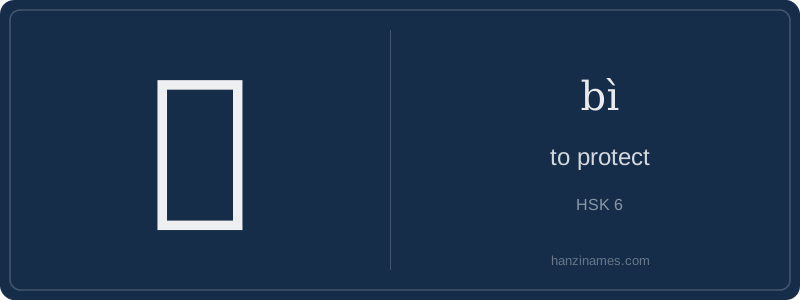
庇 is most commonly encountered in formal, literary, or bureaucratic contexts—not daily casual speech—but remains vital in idioms, legal documents, and historical discourse. It appears in the classical idiom ‘庇护’ (bìhù, 'to shelter/protect'), widely used in modern Chinese law (e.g., 'refugee protection' = 难民庇护) and diplomatic statements. The term ‘庇佑’ (bìyòu, 'divine protection') is ubiquitous in temple inscriptions and ancestral rites, reflecting enduring folk belief in spiritual guardianship.
The character’s form is not pictographic but phono-semantic: the 广 radical signals semantic association with space/shelter, while the phonetic component 比 (bǐ) suggests pronunciation. Though 比 originally meant 'to compare', here it serves only as a sound clue. In contemporary life, Chinese people encounter 庇 most often on temple plaques ('神明庇佑' — 'May the gods protect us') or in news about legal asylum cases.
The character 庇 (bì) embodies a deeply relational and hierarchical conception of protection in Chinese thought—not as individualistic defense, but as shelter granted from a position of moral or structural authority. Its radical 广 (guǎng), meaning 'wide' or 'spacious', evokes the image of a roof or canopy, suggesting that true protection is expansive, encompassing, and architectural—something that shelters without enclosing, covers without controlling.
This reflects Confucian ideals where benevolence (仁 rén) and righteousness (义 yì) obligate those in power—rulers, elders, ancestors—to extend care like a roof over dependents. Protection is not transactional; it’s a duty rooted in role and responsibility. The character appears in classical texts like the *Book of Rites* (礼记), where rulers ‘shelter the people’ (庇民) through just governance—not force, but moral coverage.
In Daoist and folk contexts, 庇 also implies cosmic shelter: deities or ancestral spirits ‘shelter’ descendants from misfortune, blurring the line between physical safety and spiritual auspice. Unlike Western notions of autonomy-first security, 庇 centers interdependence—protection as an act of continuity, linking past, present, and future under one symbolic roof. To be ‘under someone’s 庇’ is to dwell in their virtue’s shadow.
Example Sentences
Common Compounds
Similar Characters — Don't Mix These Up
Your First Step into Chinese Culture: Get a Chinese Name
Every journey into Chinese begins with a name. Use our free Chinese name generator to create a meaningful, personalized Chinese name that fits you perfectly.
Get My Chinese Name →