挎
Character Story & Explanation
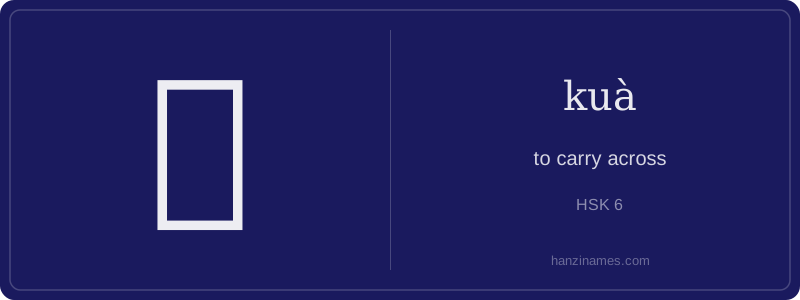
In contemporary Chinese life, 挎 is most commonly used for carrying bags, baskets, or small items across the chest or over the shoulder—especially in informal, mobile, or labor-intensive contexts. It appears in phrases like 挎包 (kuàbāo, 'crossbody bag') and 挎篮子 (kuà lánzi, 'to carry a basket'), widely used in markets, rural delivery work, and fashion descriptions. While no major idiom centers solely on 挎, it frequently appears in compound verbs like 挎着走 (kuà zhe zǒu, 'to walk while carrying across the chest').
The character is not pictographic; it evolved from seal script with 扌 (hand) + 夸 (kuā, phonetic). The modern form (9 strokes) stabilized during the Song dynasty. Today, you’ll see it on subway ads for crossbody purses, in delivery platform interfaces (e.g., ‘骑手挎包送餐’), and in CCTV documentaries about rural couriers—always implying active, personal, hands-on transport.
At first glance, 挎 (kuà) appears to be a simple verb meaning 'to carry'—but it reveals a deeper Chinese cultural emphasis on embodied, practical action. Unlike abstract or passive verbs, 挎 always involves the human body in motion: the arm crooked, a bag slung across the chest or over the shoulder. This physicality reflects the Confucian and Daoist valuing of grounded, intentional presence—where meaning emerges not in theory, but in posture, gesture, and daily labor.
The radical 扌 (hand) anchors the character in human agency, while the right component 夸 (kuā, 'to boast') is phonetic—but its presence subtly evokes cultural nuance: carrying is never merely functional; it often signals identity, status, or care. A student 挎ing a backpack, a vendor 挎ing wicker baskets, or a soldier 挎ing a rifle all perform socially legible roles through this single motion—making 挎 a quiet grammar of belonging.
Historically, 挎 appears in late imperial texts and modern vernacular literature as a marker of ordinary resilience. It rarely appears in classical poetry or formal edicts, yet thrives in oral storytelling, folk songs, and socialist-era posters depicting workers and farmers. Its HSK-6 placement signals not rarity, but semantic precision: it distinguishes *how* one carries—not just weight, but responsibility, memory, or dignity—within China’s relational worldview, where objects are carried *with* people, not merely *by* them.
Example Sentences
Common Compounds
Similar Characters — Don't Mix These Up
Your First Step into Chinese Culture: Get a Chinese Name
Every journey into Chinese begins with a name. Use our free Chinese name generator to create a meaningful, personalized Chinese name that fits you perfectly.
Get My Chinese Name →