捧
Character Story & Explanation
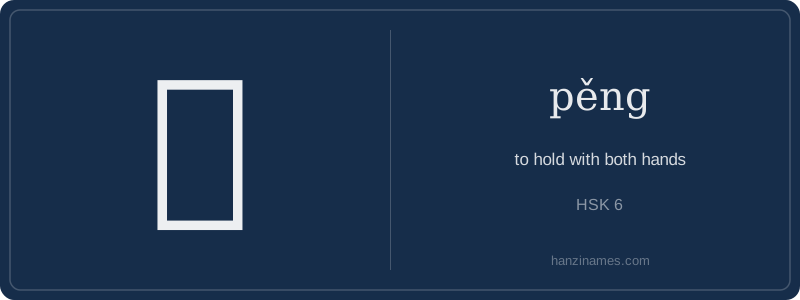
In daily life, 捧 is commonly used in set phrases like 捧场 (pěng chǎng, 'to support an event or performance') and 捧腹大笑 (pěng fù dà xiào, 'to laugh so hard you hold your belly'). Historically, it appears in classical texts such as the Book of Rites (Lǐjì), prescribing two-handed presentation of ritual vessels. The idiom 捧心西子 (pěng xīn xī zǐ)—referencing the legendary beauty Xī Shī clutching her chest—dates back to the Warring States period and remains widely cited in literature and art criticism.
The character is not pictographic but phono-semantic: 扌 (hand radical) signals meaning; 逢 (féng) provides phonetic approximation. Its earliest attested form appears in Han dynasty clerical script, already bearing its modern structure. Today, Chinese people use 捧 most frequently in expressions of active support—e.g., fans 'holding up' a new singer on Weibo—or in ceremonial contexts like handing wedding certificates during marriage registration at civil affairs bureaus.
Imagine stepping into a quiet teahouse in Hangzhou’s historic Hefang Street. An elderly tea master kneels before a low lacquer tray, carefully lifting a steaming Yixing clay teapot with both hands—palms up, fingers curled gently. This deliberate, respectful gesture isn’t just practical; it’s embodied language. The character 捧 (pěng) captures that precise physical and cultural act: holding or presenting something precious—tea, a gift, a diploma—with humility and care.
In modern China, 捧 extends beyond literal hand-holding. It appears in social media slang like 捧红 (pěng hóng, 'to boost someone to fame'), reflecting how digital platforms collectively 'lift up' influencers—mirroring the original two-handed offering, now metaphorical. Even in corporate settings, employees may '捧场' (pěng chǎng, 'support an event') by attending a colleague’s presentation—not just showing up, but actively affirming value through presence and attention.
The radical 扌 (hand) anchors 捧 in bodily action, while the right side 逢 (féng, 'to meet, encounter') hints at intentionality: this is not passive holding, but active, relational engagement—meeting an object or person with reverence. At HSK 6, learners encounter 捧 in nuanced contexts: literary descriptions, formal ceremonies, and ironic modern usage—where 'over-praising' (捧杀, pěng shā) reveals how even respect can become harmful when excessive.
Example Sentences
Common Compounds
Similar Characters — Don't Mix These Up
Your First Step into Chinese Culture: Get a Chinese Name
Every journey into Chinese begins with a name. Use our free Chinese name generator to create a meaningful, personalized Chinese name that fits you perfectly.
Get My Chinese Name →