掩
Character Story & Explanation
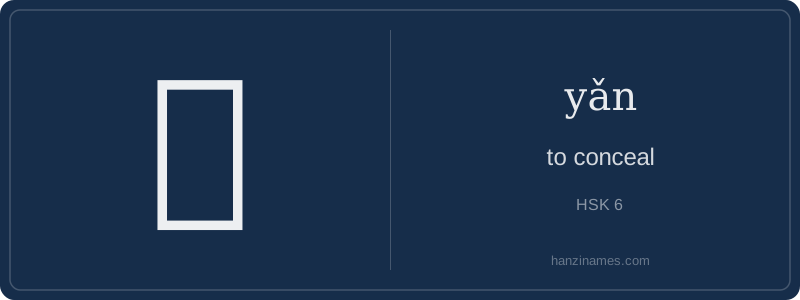
掩 is widely used in modern Mandarin in both literal and figurative ways: journalists write about officials trying to 掩盖 (yǎn gài, 'cover up') scandals; doctors may 掩盖症状 (yǎn gài zhèng zhuàng, 'mask symptoms'); and in classical idioms like 掩耳盗铃, recorded as early as the Warring States period (475–221 BCE) in the Classic of Master Lü. This idiom remains common in education and media to critique denial or hypocrisy.
The character’s earliest attested form appears in seal script (c. 3rd century BCE), where 扌 (hand) combines with 俺 (ǎn, now obsolete), suggesting 'hand-covering'. Though its oracle-bone origins are unconfirmed, the modern structure clearly signals manual action + concealment — reflecting how speakers today use it: e.g., parents might 掩住孩子的眼睛 (yǎn zhù hái zi de yǎn jīng, 'cover their child’s eyes') during fireworks.
Hi students! Let’s learn 掩 (yǎn) — a verb meaning 'to cover up' or 'to conceal'. It’s not just about physical covering, like closing a book or shutting a door. In Chinese, 掩 often carries a subtle, sometimes intentional, sense of hiding something from view or awareness — whether it’s an emotion, a mistake, or even light. Think of it as the quiet action behind 'hushing', 'veiling', or 'suppressing'.
This character belongs to the hand radical (扌), telling us it involves a physical or deliberate human action — literally 'a hand doing the covering'. Its 11 strokes include balanced components: the left-hand side (扌) and right-side parts that hint at sound (yǎn) and meaning (like ‘covering’ + ‘strictness’ in older forms). Don’t worry about memorizing every stroke yet — focus on how it functions in real phrases.
At HSK Level 6, 掩 appears in mature, nuanced contexts — not daily small talk, but in literature, news, and formal speech. You’ll see it in idioms like 掩耳盗铃 (yǎn ěr dào líng, 'covering one’s ears while stealing a bell'), which humorously describes self-deception. Understanding 掩 helps you grasp deeper layers of Chinese expression — how people talk about truth, secrecy, and social discretion.
Example Sentences
Common Compounds
Similar Characters — Don't Mix These Up
Your First Step into Chinese Culture: Get a Chinese Name
Every journey into Chinese begins with a name. Use our free Chinese name generator to create a meaningful, personalized Chinese name that fits you perfectly.
Get My Chinese Name →