拨
Character Story & Explanation
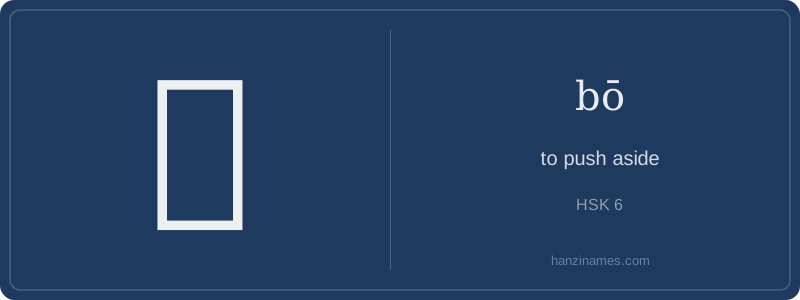
In daily life, 拨 most commonly appears in telecom contexts: dialing a phone number (拨号, bō hào) is ubiquitous—every WeChat voice call starts with tapping ‘拨’ on the interface. It’s also standard in government and finance: ‘拨款’ (bō kuǎn, ‘to allocate funds’) appears in official notices from the Ministry of Finance, and ‘拨冗’ (bō rǒng, ‘to take time out despite busyness’) remains a respectful phrase in formal invitations. Historically, 拨 was used in Ming-Qing military records to denote troop reallocation (e.g., ‘拨兵三千’ — ‘assign three thousand troops’).
The character is not pictographic but phono-semantic: 扌 (hand radical) + 發 (fā, phonetic component, originally meaning ‘to emit’). While 發 itself evolved from oracle-bone forms depicting sprouting grain, 拨’s earliest attestation is in Warring States bamboo slips (4th c. BCE) as a verb meaning ‘to remove obstacles to enable movement’. No mythical origin—just practical, documented administrative language.
Imagine a bustling Beijing subway platform at rush hour—crowds surge forward as the train doors open. A conductor calmly but firmly uses his hand to bō (拨) aside the pressing throng, creating a clear path for passengers to board safely. This physical act of ‘pushing aside’ is the core meaning of 拨: a controlled, purposeful displacement using the hand, foot, or tool—not forceful shoving, but directional guidance.
The character’s left-hand radical 扌 (hand) signals bodily action, while the right component 發 (fā, ‘to emit’) hints at initiating motion—like triggering movement by clearing an obstacle. In modern usage, 拨 extends metaphorically: we ‘dial’ a phone number (拨号), ‘allocate’ funds (拨款), or ‘redirect’ resources (拨转)—always implying intentional redirection after removing interference.
At HSK Level 6, 拨 appears in sophisticated contexts: policy documents discussing budget allocation, telecom regulations about call routing, or historical texts describing military maneuvers where commanders ‘diverted troops’ (拨兵). Its precision makes it indispensable for formal, administrative, and technical Chinese—never casual slang, always deliberate, calibrated action.
Example Sentences
Common Compounds
Similar Characters — Don't Mix These Up
Your First Step into Chinese Culture: Get a Chinese Name
Every journey into Chinese begins with a name. Use our free Chinese name generator to create a meaningful, personalized Chinese name that fits you perfectly.
Get My Chinese Name →