桨
Character Story & Explanation
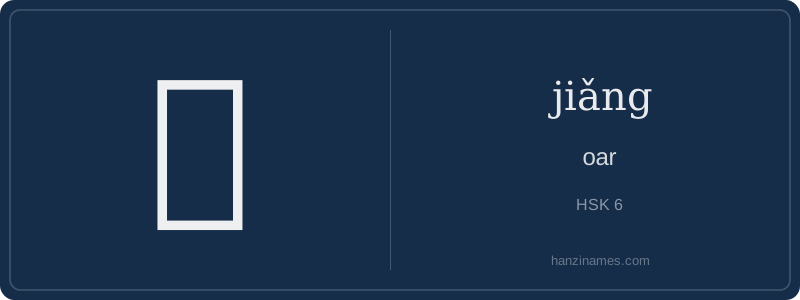
桨 is commonly used in modern Chinese for rowing sports, scenic boat tours (e.g., West Lake in Hangzhou), and traditional water festivals like the Dragon Boat Racing during Duanwu Festival. It appears in fixed phrases such as ‘摇桨’ (yáo jiǎng, ‘to row’) and ‘一桨一桨’ (yī jiǎng yī jiǎng, ‘stroke by stroke’), emphasizing persistence. Historically, Tang and Song dynasty texts reference 桨 in maritime records and poetry—Li Bai’s ‘早发白帝城’ alludes to oar-driven travel along the Yangtze.
The character is a phono-semantic compound: 木 (wood, semantic) + 将 (jiāng, phonetic component, simplified from ‘將’). It first appeared in seal script (c. 3rd century BCE) as a clear depiction of a wooden shaft with a broad blade—no oracle-bone form survives, but Han dynasty bamboo slips confirm its consistent structure and usage for paddling vessels.
The character 桨 (jiǎng) embodies the Chinese worldview of harmony between human effort and natural forces. As an oar or paddle, it represents controlled, rhythmic action—neither brute force nor passive drift, but mindful coordination with water’s flow. This reflects the Daoist ideal of wu wei: effective action through alignment with inherent patterns, not domination. The wooden radical 木 underscores that tools are extensions of nature, not conquests over it—craftsmanship rooted in respect for material and environment.
Historically, 桨 symbolizes collective endeavor: rowing demands synchrony, trust, and shared purpose. In ancient riverine and canal-based societies, oars powered transport, trade, and military logistics—making 桨 a quiet emblem of social cohesion and civilizational continuity. Its simplicity belies profound cultural weight: a single tool that moved grain to capitals, poetry down the Yangtze, and scholars to imperial examinations.
In modern consciousness, 桨 evokes resilience and quiet agency. Unlike the sail (帆), which depends on wind, or the motor, which imposes noise and fuel, the oar signifies self-reliance, stamina, and intimate engagement with one’s surroundings. It appears metaphorically in literature and speeches—not as a weapon or trophy, but as a humble instrument of steady progress, echoing Confucian values of perseverance (毅) and measured cultivation (修).
Example Sentences
Common Compounds
Similar Characters — Don't Mix These Up
Your First Step into Chinese Culture: Get a Chinese Name
Every journey into Chinese begins with a name. Use our free Chinese name generator to create a meaningful, personalized Chinese name that fits you perfectly.
Get My Chinese Name →