渺
Character Story & Explanation
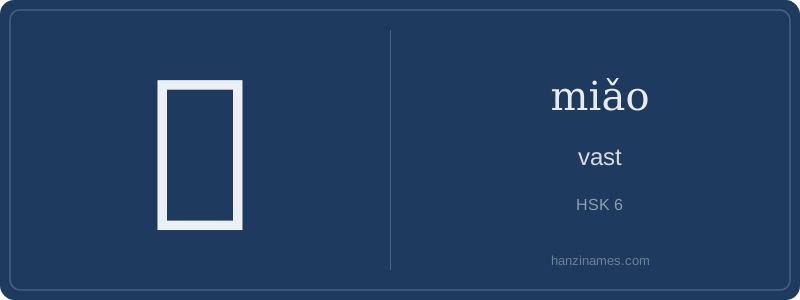
渺 is commonly used in fixed expressions like 渺无人烟 (miǎo wú rén yān) — 'desolate and uninhabited', often describing remote deserts or mountains in travel writing or documentaries. It also appears in the idiom 渺如烟海 (miǎo rú yān hǎi), meaning 'vast as a sea of mist', used metaphorically for enormous quantities (e.g., ancient texts or data). Historically, it appears in Tang and Song dynasty poetry to evoke solitude amid nature.
The character’s form evolved from seal script, where the right side (眇) originally meant 'to squint' or 'look narrowly' — suggesting perception of distant things. Combined with water (氵), it implies gazing across endless water, reinforcing the sense of vast, hazy distance. No oracle-bone origin is documented; its earliest attested use is in Warring States bamboo texts describing terrain.
Hi students! Let’s explore the character 渺 (miǎo). It’s pronounced with the third tone — think of a gentle dip in your voice, like saying 'mee-ow' but shorter and lower. Though it literally means 'vast' or 'vastly distant', it often carries a poetic, almost melancholic sense of scale — not just physical size, but emotional distance or insignificance against something immense, like the ocean or time itself.
This character belongs to the water radical (氵), which appears on the left side — a clear clue that its original meaning connects to water-related vastness: wide rivers, boundless seas, or misty horizons over water. Don’t confuse it with characters meaning ‘small’ — 渺 is about *perspective*: when something is so huge, the observer feels tiny or far away.
At HSK Level 6, 渺 appears mainly in literary, descriptive, or philosophical contexts — not everyday small talk. You’ll find it in essays, poetry, and formal writing describing landscapes, history, or human ambition. Mastering it helps you read nuanced Chinese texts and express subtle ideas about scale, time, and humility — key themes in classical and modern Chinese thought.
Example Sentences
Common Compounds
Similar Characters — Don't Mix These Up
Your First Step into Chinese Culture: Get a Chinese Name
Every journey into Chinese begins with a name. Use our free Chinese name generator to create a meaningful, personalized Chinese name that fits you perfectly.
Get My Chinese Name →