熄
Character Story & Explanation
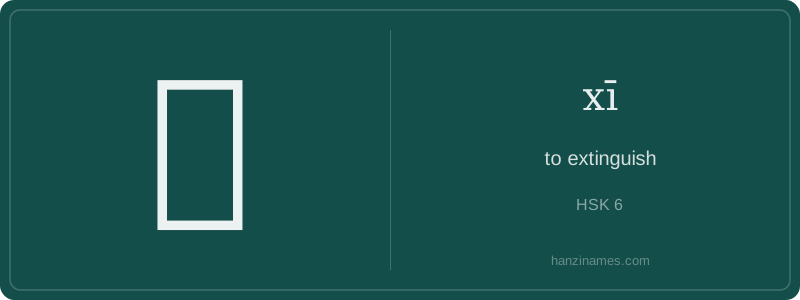
In modern China, 熄 is most commonly seen in public safety signage (e.g., '请熄灭烟头' — 'Please extinguish cigarette butts') and official notices about fire prevention. It appears in the standardized phrase 熄火 (xīhuǒ), used historically in imperial records to denote the end of dynastic legitimacy ('the flame of mandate has been extinguished'), and today in news headlines describing the containment of wildfires or industrial furnace shutdowns. The HSK 6 frequency reflects its formal register rather than daily colloquial use.
The character is a late creation—first reliably attested in Song dynasty texts—and is not found in oracle bone or bronze inscriptions. Its structure is clearly phono-semantic: left 火 (fire radical, indicating meaning category) + right 息 (xī, both phonetic component and semantic reinforcement meaning 'to cease'). No pictographic origin exists; it was systematically constructed during classical lexicographic standardization.
Imagine a summer evening in Chengdu’s Jinli Ancient Street, where paper lanterns glow warmly above bustling teahouses. Suddenly, a gust of wind flutters through the alley—candles flicker wildly, and an elderly tea master calmly reaches up to extinguish one before it ignites the bamboo awning. That deliberate, controlled act—the quiet snuffing of flame—is precisely what 熄 (xī) captures: not violent destruction, but intentional cessation of fire or light.
The character 熄 belongs to the 火 (fire) radical family, anchoring its meaning in combustion-related actions. Its right side, 息 (xī), means 'to rest' or 'to cease', reinforcing the idea of fire coming to rest—no longer burning, no longer active. This semantic pairing is typical of phono-semantic compounds in Chinese: fire + rest = extinguish.
Unlike generic verbs like 关 (guān, 'to close'), 熄 specifically implies termination of a burning or luminous state—whether literal (a candle, stove, or wildfire) or metaphorical (a rumor, passion, or hope). It appears in formal contexts more than casual speech, reflecting precision in describing cessation of energy-based phenomena—a nuance English often flattens with 'put out' or 'turn off'.
Example Sentences
Common Compounds
Similar Characters — Don't Mix These Up
Your First Step into Chinese Culture: Get a Chinese Name
Every journey into Chinese begins with a name. Use our free Chinese name generator to create a meaningful, personalized Chinese name that fits you perfectly.
Get My Chinese Name →