痹
Character Story & Explanation
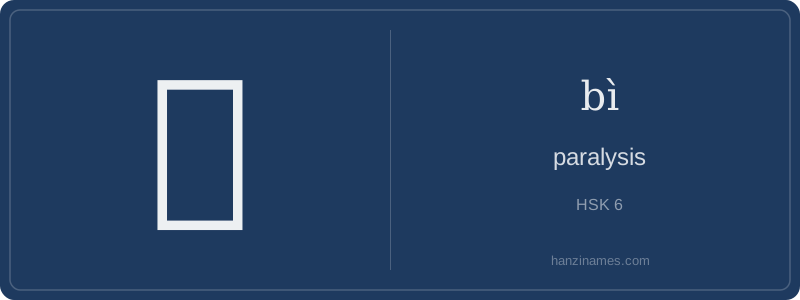
In contemporary China, 痹 appears most frequently in medical contexts—especially TCM hospitals, herbal prescriptions, and national health guidelines. It’s a core term in the phrase ‘痹证’ (bì zhèng, ‘bi syndrome’), officially defined in the 2017 WHO International Classification of Diseases (ICD-11) under traditional medicine chapters. Common compounds include ‘风湿痹’ (fēng shī bì, ‘wind-damp bi’) and ‘顽痹’ (wán bì, ‘chronic, stubborn bi’), widely used in clinical documentation and patient education materials.
The character 痹 is a phono-semantic compound: the radical 疒 (nè, ‘sickness’) signals its medical domain, while the phonetic component 皮 (pí, ‘skin’) indicates pronunciation (though modern reading is bì, reflecting historical sound shifts). Its earliest verified appearance is in the Han dynasty medical text *Huangdi Neijing* (c. 2nd century BCE–2nd century CE), where it describes obstructive syndromes involving pain, numbness, and limited mobility—still clinically relevant today.
Imagine a crisp autumn morning in Beijing’s Dongzhimen Hospital, where an elderly man sits quietly in the Traditional Chinese Medicine (TCM) outpatient ward. His right hand trembles slightly as he holds a warm cup of herbal tea. The doctor gently asks about his numbness and stiffness—symptoms he’s endured for months after a stroke. On the medical record, the character 痹 appears clearly beside ‘wind-damp obstruction’, reflecting a classical TCM diagnosis rooted in centuries of clinical observation.
痹 (bì) is not just clinical jargon—it embodies a holistic view of disease: when external pathogens like wind, cold, or dampness invade the body’s channels and impede Qi and blood flow, the result is pain, numbness, or paralysis. Unlike Western biomedicine’s focus on nerves or muscles alone, 痹 integrates environmental, emotional, and constitutional factors—making it central to diagnoses like ‘bi syndrome’ in acupuncture and herbal prescriptions.
This character bridges ancient theory and modern practice. In 2023, China’s National Administration of Traditional Chinese Medicine listed ‘痹证’ (bì zhèng) among 15 standardized TCM syndromes for national clinical guidelines. Patients receiving acupuncture for rheumatoid arthritis or post-stroke rehabilitation may hear their condition described using 痹—underscoring how deeply this concept remains embedded in both hospital wards and village clinics across China.
Example Sentences
Common Compounds
Similar Characters — Don't Mix These Up
Your First Step into Chinese Culture: Get a Chinese Name
Every journey into Chinese begins with a name. Use our free Chinese name generator to create a meaningful, personalized Chinese name that fits you perfectly.
Get My Chinese Name →