磕
Character Story & Explanation
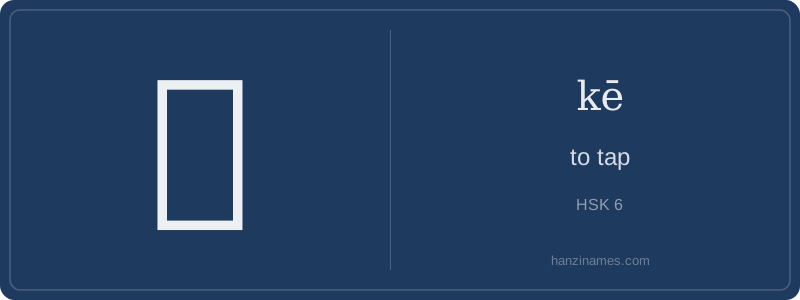
In daily life, 磕 is commonly used in Northern Chinese dialects and informal Mandarin to describe light, abrupt contact—especially unintentional: 'kē zhe yá' (teeth chattering), 'kē zài shí tou shàng' (stumbling onto a rock), or 'kē bēi' (tapping a cup on the table to signal a toast). It appears in the fixed phrase 磕头 (kē tóu), meaning 'to kowtow', historically required in imperial audiences and still performed during ancestral rites and temple pilgrimages. The HSK 6-level usage reflects its nuanced register—formal in ritual contexts, colloquial in physical mishaps.
The character’s structure is well-documented: left radical 石 (stone) indicates semantic association with hardness, impact, or weight; right side is a phonetic component 可 (kě), which approximates the pronunciation kē (with tone shift). It first appeared in standardized clerical script during the Han dynasty—not as a pictograph, but as a phono-semantic compound, consistent with over 80% of Chinese characters.
As an archaeologist brushing dust from a Qing-dynasty ritual manual, I found 磕 inscribed beside illustrations of kowtowing officials—each stroke a deliberate tap of forehead to floor. The radical 石 (stone) anchors it not in geology, but in weight: the stone-like gravity of reverence. Its fifteen strokes map a physical descent—first the head (ke), then the impact (shi)—a kinetic glyph encoding ritual percussion long before modern dictionaries codified it as 'to tap'.
This character is a fossilized gesture. In excavated Ming-era theatre scripts, 磕 appears in stage directions: 'kē tóu sān cì' (tap head three times), describing actors bowing to ancestors. Unlike abstract verbs, 磕 preserves bodily memory—its top component 口 suggests the mouth’s silent participation in solemnity, while 下 (down) completes the vertical motion. No oracle bone form survives, but bronze inscriptions from the Warring States show early variants emphasizing downward force.
Modern linguistic stratigraphy reveals how 磕 shifted from sacred to colloquial ground. While still used in formal contexts like temple rituals, its most vibrant layer today is vernacular speech—especially in Northern Mandarin, where it conveys accidental, light, or repetitive tapping: a cup hitting a table, teeth chattering, or even stumbling ('kē dǎo'—to trip and hit the ground). This semantic sedimentation mirrors how ancient ceremonial acts erode into everyday physics—still resonant, but no longer reverent.
Example Sentences
Common Compounds
Similar Characters — Don't Mix These Up
Your First Step into Chinese Culture: Get a Chinese Name
Every journey into Chinese begins with a name. Use our free Chinese name generator to create a meaningful, personalized Chinese name that fits you perfectly.
Get My Chinese Name →