绒
Character Story & Explanation
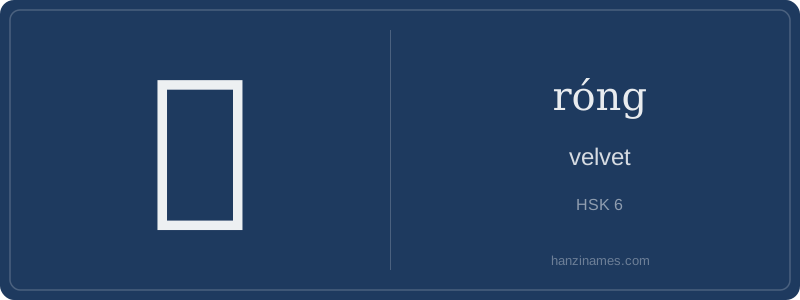
绒 is widely used in modern Chinese for high-quality textiles—especially in fashion and home goods. It appears in brand names (e.g.,鄂尔多斯 E’erduosi cashmere), government quality standards (GB/T 29862–2013 for wool and cashmere labeling), and daily terms like 绒衣 (róngyī, fleece jacket) and 绒布 (róngbù, flannel). A common phrase is 绒毛 (róngmáo, downy hair/fuzz), used medically (e.g., bronchial cilia) and botanically (e.g., peach skin fuzz).
The character evolved from 糹 (silk radical) + 戎 (róng, originally meaning ‘military’, later phonetic here). It first appeared in seal script during the Qin dynasty (3rd c. BCE) as a phono-semantic compound—no pictographic origin. Its form reflects standard Han-dynasty character consolidation, not oracle-bone imagery.
绒 (róng) embodies the Chinese cultural reverence for subtle texture and refined tactility—qualities long associated with elegance, warmth, and quiet luxury. Unlike Western emphasis on visual grandeur, classical Chinese aesthetics often prize what is soft to the touch and gentle to the eye: silk brocade, downy plumage, or the plush nap of velvet. This character captures that sensory philosophy—where material softness becomes a metaphor for moral gentleness and cultivated grace.
In traditional textile culture, 绒 was inseparable from status and seasonality: imperial winter robes lined with fine goat or rabbit fur (羊绒 yángróng, cashmere) signaled both privilege and harmony with natural cycles. The character thus reflects a worldview where human refinement aligns with nature’s softest offerings—not dominance over matter, but attunement to its delicate properties.
Even today, 绒 appears in poetic and medical contexts alike: in Tang dynasty poetry describing ‘frost-like goose-down’ (鹅绒 éróng), and in modern Traditional Chinese Medicine texts referencing ‘lung-protecting softness’—linking physical warmth to physiological balance. This duality reveals a core Chinese principle: the microcosm of fabric mirrors the macrocosm of body, society, and cosmos—all governed by principles of yielding strength and nourishing gentleness.
Example Sentences
Common Compounds
Similar Characters — Don't Mix These Up
Your First Step into Chinese Culture: Get a Chinese Name
Every journey into Chinese begins with a name. Use our free Chinese name generator to create a meaningful, personalized Chinese name that fits you perfectly.
Get My Chinese Name →