苍
Character Story & Explanation
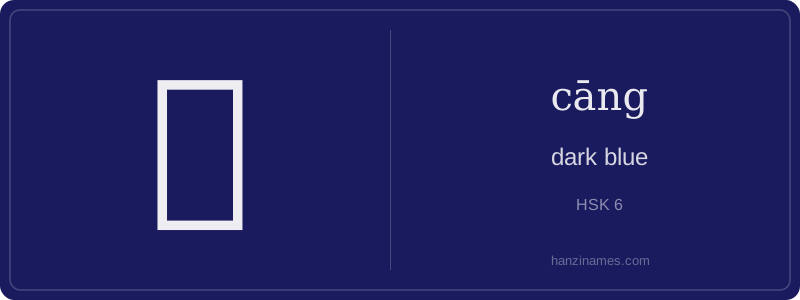
苍 is widely used in modern Chinese in geographical names (e.g., Cangshan Mountain in Yunnan), literary expressions (e.g., 苍天 ‘vast, dark-blue sky’, historically invoked in oaths and classical texts), and compound words like 苍白 (cāngbái, ‘pale’ — literally ‘dark-blue white’, denoting sickly pallor). It appears in the idiom 苍海桑田 (cānghǎi sāngtián, ‘blue sea turns to mulberry fields’), meaning dramatic change over time — a phrase documented since the Jin dynasty (3rd–5th c. CE) in texts like Fengsu Tongyi.
The character’s form evolved from seal script, where 艹 (grass radical) originally signaled plant-related meanings, but here it’s phonetic — the top part (艹) combines with 下 (xià, now simplified to 仓) for sound. Its earliest attested use (Warring States bamboo slips) already conveys ‘dark blue/greenish’ and ‘graying’, confirming its long-standing association with aged, natural tones rather than literal vegetation.
Imagine standing on the Great Wall at dawn, watching the mist rise from the Yan Mountains — the sky isn’t black or gray, but a deep, cool, almost indigo blue. That’s 苍 (cāng): not bright azure, but the profound, slightly weathered blue of aged ink, distant mountains, or twilight sea. It evokes stillness, antiquity, and quiet majesty — a color with weight and history, never flashy.
In classical Chinese poetry and calligraphy, 苍 carries poetic gravity. It appears in phrases like 苍山 (Cāngshān, ‘Dark Blue Mountains’) — a real mountain range in Yunnan — and in literary descriptions of aged pine bark or storm-laden skies. Unlike 青 (qīng), which spans green to blue, 苍 specifically suggests maturity, time-worn depth, and a muted, natural hue rooted in observation.
Though often translated as ‘dark blue’, 苍 also subtly implies aging or graying — as in 苍老 (cānglǎo, ‘aged’). This semantic overlap reveals how Chinese color terms intertwine with time and condition: a ‘dark blue’ sky may be majestic, but a ‘dark blue’ beard hints at wisdom earned over decades. It’s a lexical bridge between sight and lifespan — visual tone and lived experience fused in one character.
Example Sentences
Common Compounds
Similar Characters — Don't Mix These Up
Your First Step into Chinese Culture: Get a Chinese Name
Every journey into Chinese begins with a name. Use our free Chinese name generator to create a meaningful, personalized Chinese name that fits you perfectly.
Get My Chinese Name →