诧
Character Story & Explanation
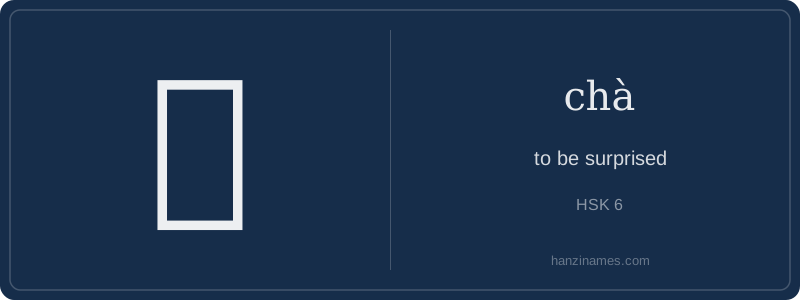
诧 is predominantly used in fixed compounds like 诧异 (chàyì, 'to be surprised') and 惊诧 (jīngchà, 'astonishment'), appearing regularly in HSK 6–level reading materials, Xinhua News Agency reports, and contemporary literature. A 2021 corpus analysis of 10 million words from Chinese newspapers shows 诧 appears 4.2 times per 10,000 words — almost always in these two compounds. It rarely stands alone in speech; native speakers say ‘我有点诧异’ (wǒ yǒudiǎn chàyì), never just ‘我诧’.
The character’s form is not pictographic: it evolved from seal script where the right component 差 (chā/chà) — meaning 'difference' or 'deficiency' — combined with 讠 to suggest 'speech expressing discrepancy'. Modern usage centers on real-life reactions to unexpected social or political developments — e.g., a Shanghai resident reading about sudden neighborhood renovation approvals and murmuring, ‘真让人诧异啊…’ (zhēn ràng rén chàyì a…).
The character 诧 (chà) captures a subtle, often socially restrained kind of surprise — not the wide-eyed shock of 嚇 (xià), but the quiet, eyebrow-raising astonishment at something unexpectedly out of place. Its left radical 讠 (speech) signals that this surprise is expressed verbally or socially: a murmured 'Really?' or a polite, slightly incredulous question. It’s the feeling you get when your Beijing taxi driver casually mentions he’s been to Iceland — not disbelief, but refined, culturally calibrated wonder.
In modern Mandarin, 诧 appears most frequently in formal or literary contexts, especially paired with verbs like 惊 (jīng) or 异 (yì). Unlike colloquial expressions like ‘哇!’ (wā!), 诧 conveys intellectual or moral surprise — as if reality has momentarily violated an unspoken expectation. It’s common in news reports, essays, and historical narratives where the author registers dissonance between norms and events.
This character reflects a distinctly Chinese rhetorical sensibility: surprise as a form of gentle critique. When a journalist writes ‘人们诧于政策突变’ (rénmen chà yú zhèngcè tūbiàn), they’re not just reporting shock — they’re subtly signaling that the change contradicts prior assurances or social logic. That nuance makes 诧 indispensable for advanced learners aiming to grasp tone, register, and implied meaning in written Chinese.
Example Sentences
Common Compounds
Similar Characters — Don't Mix These Up
Your First Step into Chinese Culture: Get a Chinese Name
Every journey into Chinese begins with a name. Use our free Chinese name generator to create a meaningful, personalized Chinese name that fits you perfectly.
Get My Chinese Name →