诵
Character Story & Explanation
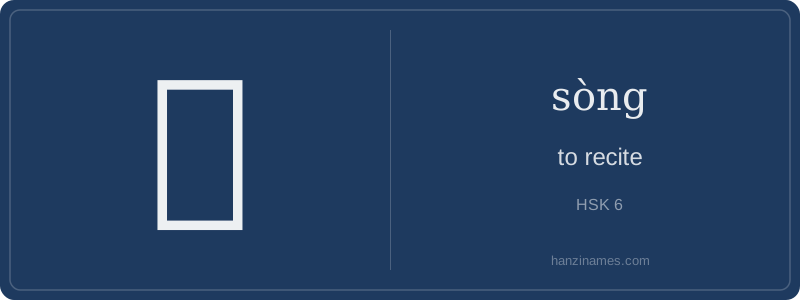
In contemporary China, 诵 appears frequently in educational contexts: HSK-6 test takers practice sòng dú (recitation + reading) for classical comprehension sections; middle schools hold annual gǔshī yǒngsòng huì (classical poetry recitation contests); and Buddhist monasteries use 诵 in phrases like 诵经 (sòng jīng, 'chanting sutras')—a documented liturgical practice since the Tang dynasty. The idiom 熟读成诵 (shú dú chéng sòng, 'read until recitation flows naturally') remains a cornerstone of traditional pedagogy.
The character 诵 is a phono-semantic compound: left radical 讠 (speech-related) + right phonetic component 甬 (yǒng, indicating approximate pronunciation). First attested in seal script during the Warring States period, it reflects the ancient link between speech, memory, and textual authority—not a pictograph, but a functional writing system innovation.
Imagine a quiet courtyard in Beijing’s historic Hutong district at dawn. A retired literature teacher, Mr. Li, sits beneath a ginkgo tree with a worn copy of the Classic of Poetry. His lips move slowly, voice low but resonant—reciting ancient verses aloud, not silently scanning words. This is sòng: deliberate, rhythmic, vocalized reading rooted in China’s oral-literary tradition, where meaning deepens through sound and breath.
The character 诵 embodies this embodied practice—not passive consumption, but active vocal participation. In classical education, students memorized and recited texts daily; today, it persists in calligraphy studios, Buddhist chanting halls, and HSK-6 exam prep, where learners rehearse classical passages aloud to internalize tone, rhythm, and nuance beyond literal translation.
Unlike casual reading (读, dú), sòng implies intentionality and performance: projecting voice, mastering tonal contours, and honoring textual weight. It bridges personal discipline and cultural continuity—each utterance a small act of preservation, linking modern learners to millennia of scholars who shaped thought through spoken word.
Example Sentences
Common Compounds
Similar Characters — Don't Mix These Up
Your First Step into Chinese Culture: Get a Chinese Name
Every journey into Chinese begins with a name. Use our free Chinese name generator to create a meaningful, personalized Chinese name that fits you perfectly.
Get My Chinese Name →