跪
Character Story & Explanation
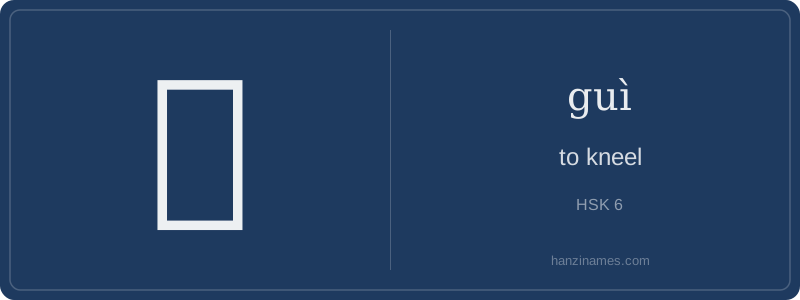
Historically, kneeling was mandatory in imperial China for subjects addressing the emperor, students before masters, or children before parents during ancestral rites. Though modern daily life rarely requires full kneeling, the word survives in idioms like 跪拜 (guìbài, 'kneel and bow') — still used in Buddhist temples and traditional weddings. It also appears in the phrase 跪求 (guìqiú, 'kneel to beg'), now used online humorously to express desperate pleading (e.g., 'I’m kneeling to ask for help!').
The character’s form is not pictographic but phono-semantic: left side 足 ('foot') indicates meaning (lowering the body), right side 危 ('wēi') provides the sound guì. This structure was standardized in the Han dynasty’s clerical script — no oracle bone or bronze inscriptions show an earlier pictorial version of 'kneeling'; its origin is purely structural, not visual.
Hi students! Today we’re learning 跪 (guì), meaning 'to kneel' — a physical act with deep cultural weight in Chinese. Unlike casual sitting or standing, kneeling involves lowering the body respectfully: knees touching the ground, torso upright. It’s not just about posture — it’s a gesture tied to hierarchy, humility, apology, and ritual. In classical texts and imperial courts, kneeling signaled submission to elders or rulers. Even today, it appears in formal ceremonies, temple worship, and heartfelt apologies.
This character belongs to the 足 (zú, 'foot') radical family — notice how the left side looks like a foot stepping down? That makes sense: kneeling starts with the feet bearing the body’s weight on the ground. The right side, 危 (wēi), means 'dangerous' or 'precarious', but here it’s used phonetically — it tells us how to pronounce guì, not the meaning. Don’t worry if the sound seems tricky; practice saying 'gwèe' (like 'gwee' with a falling tone).
At HSK Level 6, 跪 is advanced because it’s rarely used in everyday speech — you’ll mostly encounter it in literature, historical dramas, or formal writing. But understanding it helps you grasp layers of respect, regret, or power dynamics in Chinese narratives. Remember: it’s not about weakness — it’s about intention. A person who 跪 isn’t necessarily defeated; they may be honoring ancestors, seeking forgiveness, or fulfilling ritual duty. Context changes everything!
Example Sentences
Common Compounds
Similar Characters — Don't Mix These Up
Your First Step into Chinese Culture: Get a Chinese Name
Every journey into Chinese begins with a name. Use our free Chinese name generator to create a meaningful, personalized Chinese name that fits you perfectly.
Get My Chinese Name →