情
Character Story & Explanation
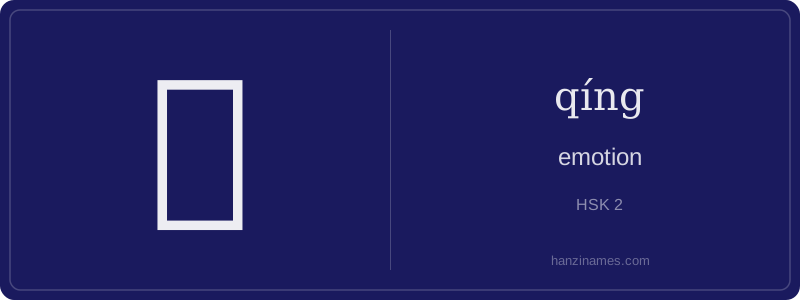
In daily life, 情 is indispensable: it appears in greetings (‘Nǐ hǎo ma?’ often answered with ‘Hái kěyǐ, jiùshì yǒu diǎnr qíngxù’ — 'Fine, just a bit emotional'), relationship talk (‘tāmen liǎnggè rén yǒu qíng’ — 'they have feelings for each other'), and bureaucratic contexts (‘qíngkuàng’ — 'situation', literally 'feeling-circumstance'). It anchors idioms like 人情世故 (rénqíng shìgù, 'social savvy') and 无情无义 (wúqíng wúyì, 'heartless and unprincipled'), both documented in Ming-Qing vernacular novels.
The character’s form is not pictographic but phono-semantic: 忄 (heart) + 青 (qīng, phonetic and connotative). No oracle bone form survives for 情—its earliest secure attestation is in Warring States bamboo slips. So rather than mythologizing origins, observe how modern speakers use it reflexively: when saying ‘qínggǎn’ (emotion), they gesture inwardly—touching chest—reinforcing the heart-radical’s lived meaning.
As a linguistic detective, I begin with the radical: 忄, the 'heart' radical—always appearing on the left in compound characters. It signals that 情 belongs to the semantic domain of inner experience, not physical objects or actions. This radical evolved from the full character 心 (xīn, 'heart') and has been standard since the Qin dynasty’s small seal script, confirming its ancient association with emotion and cognition.
The right side, 青 (qīng), originally meant 'blue-green' but carried phonetic weight here—it provides the pronunciation qíng while also subtly reinforcing meaning: in classical Chinese, 青 symbolized vitality, freshness, and life force—qualities intimately tied to emotional authenticity. This dual role (sound + nuanced sense) is typical of phono-semantic compounds, which make up ~90% of Chinese characters.
Historically, 情 first appears unambiguously in Warring States bamboo texts (475–221 BCE), where it denotes genuine human feeling—as opposed to ritual propriety (礼 lǐ) or moral principle (理 lǐ). Confucian and Daoist thinkers debated whether 情 was innate and virtuous (Mencius) or needed cultivation (Xunzi). Its enduring centrality reflects how Chinese philosophy treats emotion not as irrational noise, but as embodied moral awareness.
Example Sentences
Common Compounds
Similar Characters — Don't Mix These Up
Your First Step into Chinese Culture: Get a Chinese Name
Every journey into Chinese begins with a name. Use our free Chinese name generator to create a meaningful, personalized Chinese name that fits you perfectly.
Get My Chinese Name →