郁
Character Story & Explanation
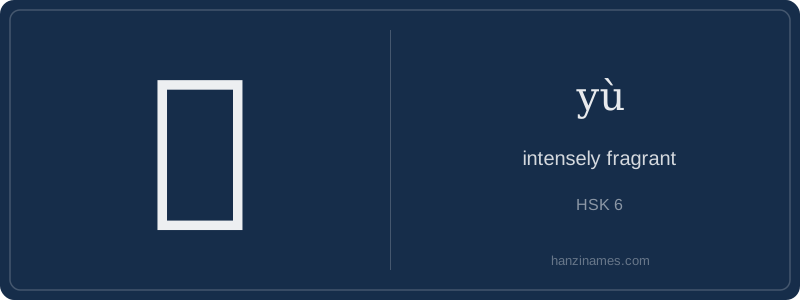
郁 is widely used in modern Mandarin to describe rich, heady fragrance—especially in culinary, botanical, and literary contexts. It appears in the HSK 6 vocabulary list and frequently in formal writing, such as food criticism (‘郁香扑鼻’) or ecological reporting (‘郁郁葱葱’). A well-documented idiom is 郁郁葱葱 (yù yù cōng cōng), meaning ‘lush and verdant’, appearing in Tang poetry and modern environmental discourse to signify ecological health and cultural resilience.
The character’s current form evolved from seal script; its left side (缶) originally depicted a wine vessel, while the right (阝, a variant of 邑) denoted a settlement—suggesting ‘fragrant wine brewed in a village’. Though simplified in modern usage, this origin reflects early China’s ritual integration of agriculture, fermentation, and communal harmony.
The character 郁 (yù) opens a fragrant portal into the Chinese worldview, where scent is never merely sensory—it’s moral, medicinal, and metaphysical. In classical thought, intense fragrance signals spiritual purity and natural abundance; thus, 郁 evokes lush forests, thriving herbs, and the vital qi of flourishing life. This isn’t passive aroma—it’s *active vitality*, a sign that heaven and earth are in harmonious resonance.
Historically, 郁 appears in ritual contexts: ancient Zhou dynasty texts describe ‘郁金香’ (yu jin xiang)—not the modern tulip, but aromatic turmeric used in ancestral wine offerings. The character’s presence in medical classics like the *Huangdi Neijing* links fragrance to liver health and emotional flow, revealing how Chinese cosmology treats scent as an outward manifestation of inner balance.
Beyond botany or perfume, 郁 embodies *intensity with integrity*: it describes both the rich scent of aged plum wine and the profound depth of poetic emotion. Its dual presence in words for ‘aromatic’ (yù) and ‘gloomy’ (yù—same pronunciation, different tone/character) reflects a core cultural insight: intensity itself is neutral—the context determines whether it blooms or burdens. This duality mirrors the Daoist embrace of complementary forces.
Example Sentences
Common Compounds
Similar Characters — Don't Mix These Up
Your First Step into Chinese Culture: Get a Chinese Name
Every journey into Chinese begins with a name. Use our free Chinese name generator to create a meaningful, personalized Chinese name that fits you perfectly.
Get My Chinese Name →