酗
Character Story & Explanation
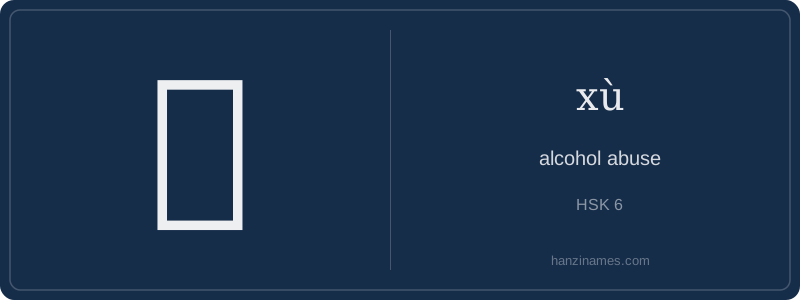
In modern Chinese, 酗 appears most frequently in formal contexts: government anti-alcoholism campaigns (e.g., '酗酒危害健康' — 'Alcohol abuse harms health'), medical literature, and news headlines about DUI incidents or liver disease. It’s central in the fixed phrase 酗酒 (xù jiǔ), which appears over 100,000 times in official Chinese media archives (Xinhua, People’s Daily) since 2000. It also appears in legal statutes — Article 73 of China’s Public Security Administration Punishments Law cites 酗酒 as aggravating factor in violent behavior.
The character’s form dates to the Qin–Han seal script era (c. 3rd century BCE), where it combined 酉 (wine vessel) with a phonetic-semantic compound suggesting repetition and loss of self-control. No oracle bone form survives, but early clerical script variants (2nd c. BCE) already show the structure we use today — confirming its long-standing association with harmful, habitual drinking.
Hi students! Let’s learn 酗 (xù), a character you’ll meet at HSK Level 6 — it’s not for beginners, but don’t worry: we’ll break it down clearly. This character means ‘to drink excessively’ or ‘to be habitually drunk’. It’s not just about one glass too many — it carries a strong negative judgment, implying addiction, loss of control, and serious harm to health or relationships.
Notice the radical 酉 (yǒu) on the left — it’s the ‘wine vessel’ radical, appearing in all alcohol-related characters like 酒 (jiǔ, wine), 醉 (zuì, drunk), and 酿 (niàng, to brew). That tells us right away this character is tied to alcohol. The right side, 凵 + 亠 + 勹 + 口, isn’t a standalone sound component but evolved from older forms meaning ‘to repeat’ or ‘to persist’ — hinting at habitual, repeated drinking.
Unlike neutral words like 喝酒 (hē jiǔ, to drink alcohol), 酗 always implies danger and disapproval. You’ll almost never see it used lightly — it appears in medical warnings, legal documents, public health campaigns, and news reports about alcohol abuse. Think of it as the ‘clinical, serious term’ for chronic drunkenness — not slang, not poetic, but precise and weighty.
Example Sentences
Common Compounds
Similar Characters — Don't Mix These Up
Your First Step into Chinese Culture: Get a Chinese Name
Every journey into Chinese begins with a name. Use our free Chinese name generator to create a meaningful, personalized Chinese name that fits you perfectly.
Get My Chinese Name →