酝
Character Story & Explanation
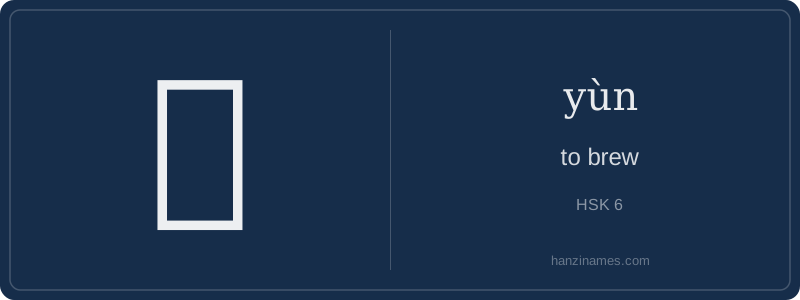
In daily life, 酝 appears almost exclusively in the compound 酝酿 (yùnniàng), meaning 'to conceive, deliberate, or prepare carefully' — used widely in formal speech, media, and policy documents (e.g., 'government is 酝酿 new regulations'). Historically, it appears in Tang and Song dynasty poetry describing wine-making, and by the Ming-Qing period, metaphorical use was standard in official memorials and literary criticism.
The character is not pictographic; its form evolved from seal script, combining 酉 (wine vessel) and 云 (yún, 'cloud', here serving phonetically). No oracle-bone or bronze inscriptions exist for 酝 — it emerged later as a phono-semantic compound. Today, Chinese people most commonly encounter it in news headlines like '政策正在酝酿中' ('Policy is under careful preparation').
At its core, 酝 (yùn) embodies the Chinese worldview of transformation through patience and time — not forceful change, but quiet, deliberate cultivation. Like fermentation, it reflects a belief that profound value emerges only when elements interact naturally under the right conditions: grain, water, yeast, warmth, and waiting. This mirrors Daoist and Confucian ideals where moral character, wisdom, or artistry ‘ferments’ gradually through reflection and practice, never rushed.
The radical 酉 (yǒu), representing a wine vessel, anchors 酝 in material culture — ancient China’s reverence for alcohol as ritual offering, medicine, and social binder. Its presence signals that this ‘brewing’ isn’t merely chemical; it’s imbued with intentionality and cultural weight. To 酝 is to engage in a sacred process — one that honors cycles, respects limits, and trusts emergence over control.
In modern usage, 酝 transcends literal brewing to symbolize the gestation of ideas, emotions, or strategies. A leader may 酝酿 policy; a poet 酝酿 verse — both implying deep internal preparation before outward expression. This linguistic extension reveals how Chinese thought maps tangible processes onto intangible realms, treating cognition and feeling as living, evolving substances — much like wine maturing in a jar.
Example Sentences
Common Compounds
Similar Characters — Don't Mix These Up
Your First Step into Chinese Culture: Get a Chinese Name
Every journey into Chinese begins with a name. Use our free Chinese name generator to create a meaningful, personalized Chinese name that fits you perfectly.
Get My Chinese Name →